


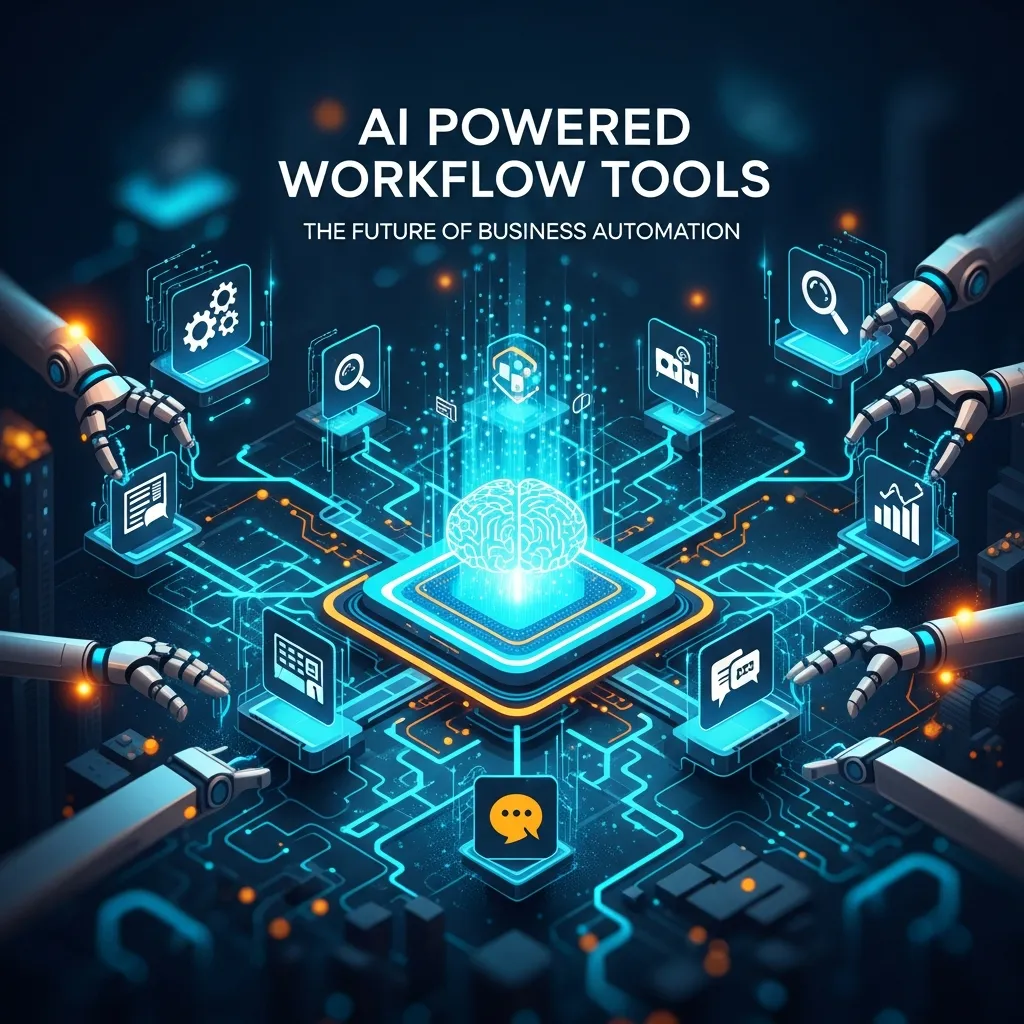
This blog explains how AI powered workflow tools improve business automation by increasing productivity, reducing manual tasks, enhancing decision-making, and enabling scalability through intelligent workflows, automation software, and AI-driven productivity systems across industries.
In today’s fast-moving digital world, businesses are under constant pressure to work faster, smarter, and more efficiently. This is where AI powered workflow tools are transforming the way companies operate. From automating repetitive tasks to improving decision-making, these tools are reshaping modern workplaces.
Organizations now rely heavily on AI automation tools, workflow automation software, and advanced productivity tools to reduce manual effort and increase output. Whether it’s small startups or large enterprises, automation has become a core part of business automation strategies.
Instead of spending hours on repetitive administrative tasks, teams can now focus on creativity, strategy, and growth. AI systems handle scheduling, data entry, email responses, reporting, customer service workflows, and much more.
This blog explores how AI powered workflow tools work, their benefits, types, use cases, comparisons, and future trends in business automation.
What Are AI Powered Workflow Tools?

AI powered workflow tools are software systems that use artificial intelligence to automate, manage, and optimize business processes. These tools reduce manual workload and increase operational efficiency.
They combine:
- Machine learning
- Data analytics
- Automation logic
- Cloud computing
These technologies help businesses create intelligent workflows that adapt and improve over time.
How They Work
AI automation tools typically follow this structure:
- Collect data from multiple sources
- Analyze patterns and behavior
- Trigger automated actions
- Optimize workflows continuously
For example, a workflow automation software can automatically assign customer support tickets based on urgency and agent availability.
Why AI Powered Workflow Tools Are Important
Modern businesses deal with massive amounts of data and repetitive processes. AI powered workflow tools help solve these challenges by improving speed, accuracy, and productivity.
Key Reasons Businesses Use Automation
- Reduce human workload
- Improve efficiency
- Minimize errors
- Save operational costs
- Increase productivity
- Enhance decision-making
These tools are now essential for digital transformation and competitive advantage.
Core Features of AI Automation Tools
AI automation tools come with advanced features that make business processes more efficient and intelligent.
Intelligent Task Automation
AI systems can automatically:
- Assign tasks
- Send reminders
- Update records
- Trigger notifications
This eliminates manual coordination in teams.
Predictive Analytics
AI powered workflow tools can analyze past data to predict future outcomes.
Benefits include:
- Better planning
- Improved forecasting
- Risk reduction
Natural Language Processing (NLP)
NLP allows tools to understand human language in:
- Emails
- Chat messages
- Documents
This improves communication automation.
Integration Capabilities
Modern workflow automation software integrates with:
- CRM systems
- Email platforms
- Project management tools
- Cloud storage
Types of AI Powered Workflow Tools
Different types of tools serve different business needs.
1. Task Automation Tools
These tools handle repetitive daily tasks such as:
- Data entry
- Scheduling
- Reporting
2. Communication Automation Tools
Used for:
- Email automation
- Chatbots
- Customer support responses
3. Project Management Tools
Help teams:
- Track progress
- Assign tasks
- Manage deadlines
4. Data Processing Tools
Used for:
- Data analysis
- Report generation
- Business intelligence
Benefits of AI Powered Workflow Tools
AI powered workflow tools provide multiple advantages for businesses of all sizes.
Increased Productivity
Employees spend less time on repetitive work and more on strategic tasks.
Cost Efficiency
Automation reduces the need for manual labor and operational costs.
Better Accuracy
AI systems reduce human errors in data processing and reporting.
Faster Decision Making
Real-time insights help businesses make faster and smarter decisions.
Scalability
Businesses can scale operations without increasing workload proportionally.
AI Automation Tools vs Traditional Systems
| Feature | AI Automation Tools | Traditional Systems |
|---|---|---|
| Speed | Fast and real-time | Slow manual processing |
| Accuracy | High | Moderate |
| Adaptability | Learns and improves | Static |
| Cost Efficiency | Long-term savings | Higher labor cost |
| Scalability | Easily scalable | Limited scalability |
AI powered workflow tools clearly outperform traditional systems in almost every category.
Use Cases of Business Automation
AI powered workflow tools are used across multiple industries.
Customer Support
- Chatbots handle FAQs
- Ticket routing automation
- Response prioritization
Marketing Automation
- Email campaigns
- Lead scoring
- Social media scheduling
Human Resources
- Resume screening
- Interview scheduling
- Employee onboarding
Finance and Accounting
- Invoice processing
- Expense tracking
- Financial reporting
E-commerce
- Order processing
- Inventory management
- Customer personalization
How AI Workflow Automation Software Improves Productivity
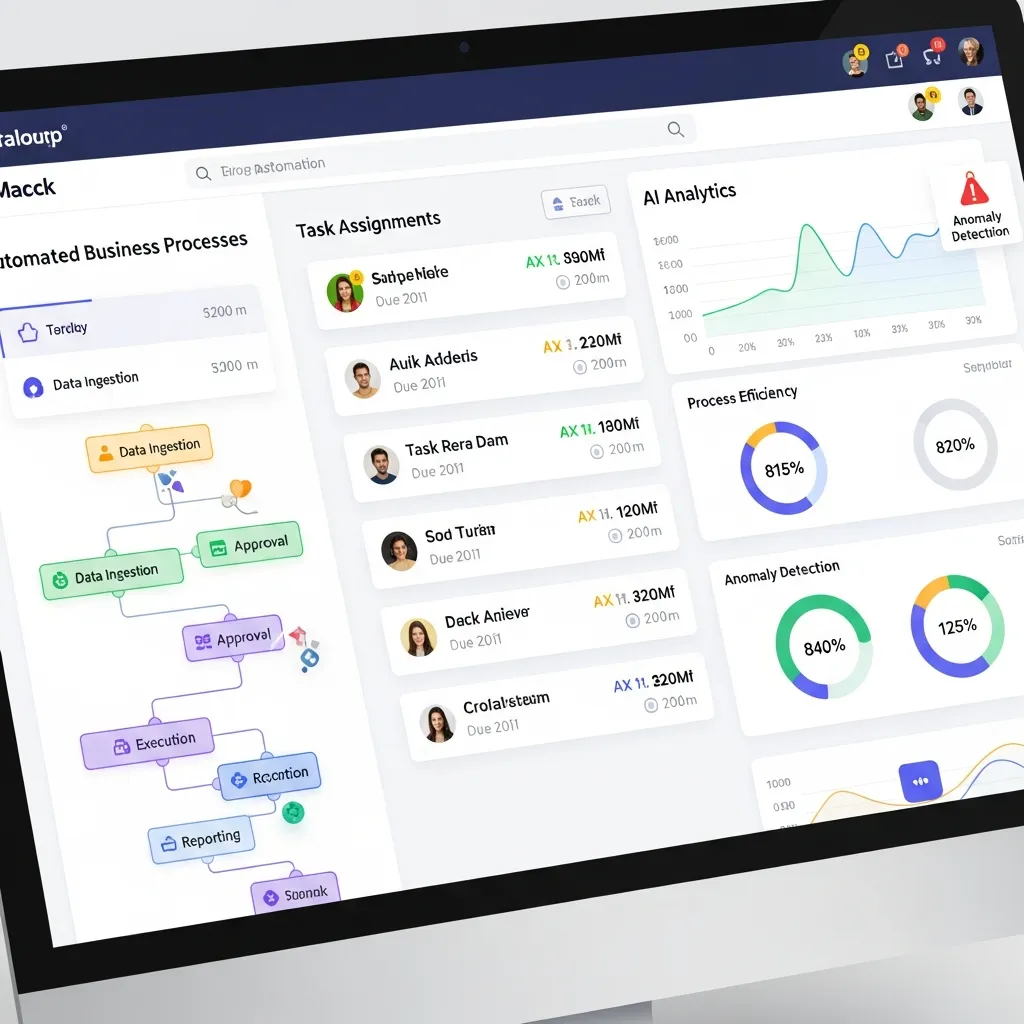
AI workflow automation software significantly boosts productivity by eliminating repetitive tasks and improving workflow efficiency.
Task Prioritization
AI automatically prioritizes tasks based on urgency and importance.
Reduced Manual Errors
Automation minimizes mistakes caused by human input.
Time Savings
Employees can save hours every day by automating repetitive workflows.
Key Challenges in AI Powered Workflow Tools
Despite their advantages, these tools come with some challenges.
High Initial Setup Cost
Advanced automation systems may require investment in software and training.
Learning Curve
Employees may need time to adapt to new systems.
Data Privacy Concerns
Handling sensitive data requires strong security measures.
Integration Issues
Some tools may not integrate easily with existing systems.
Choosing the Right AI Powered Workflow Tools
Selecting the right tool depends on business needs and goals.
Understand Business Requirements
Identify:
- Tasks to automate
- Team size
- Workflow complexity
Evaluate Features
Look for:
- AI capabilities
- Integration options
- Ease of use
Check Scalability
Ensure the tool can grow with your business.
Compare Pricing Models
Choose based on:
- Monthly cost
- Enterprise plans
- Free features
Comparison of Popular Workflow Automation Software
| Tool Type | Best For | Key Feature |
|---|---|---|
| AI Task Automation | SMEs | Task scheduling |
| CRM Automation | Sales teams | Customer tracking |
| Marketing Automation | Digital marketers | Campaign automation |
| HR Automation | HR departments | Hiring workflows |
The Role of Productivity Tools in Modern Businesses
Productivity tools are now essential in managing modern workplaces. They help teams collaborate, communicate, and complete tasks efficiently.
Key Functions
- Task management
- Team collaboration
- File sharing
- Workflow tracking
AI powered workflow tools enhance these functions with intelligent automation and insights.
Future of AI Powered Workflow Tools
The future of AI automation tools is highly promising as technology continues to evolve.
Hyper Automation
Combining multiple automation systems into a single intelligent workflow.
AI Decision Making
AI will increasingly make complex business decisions.
Voice Controlled Automation
Users will manage workflows using voice commands.
Fully Autonomous Businesses
Future companies may operate with minimal human intervention . For more insights into automation strategies and small business workflows.
Best Practices for Using AI Automation Tools
Implementing AI automation tools successfully is not just about installing software—it is about building a smart, scalable, and efficient workflow system that aligns with your business goals. Many organizations rush into automation without proper planning, which often leads to confusion, poor adoption, and underutilized systems. To get the maximum value from AI powered workflow tools, businesses must follow structured best practices that ensure smooth adoption and long-term success.
A well-planned approach helps companies improve efficiency, reduce errors, and fully unlock the potential of modern workflow automation software and productivity tools. Below are the most important best practices every business should follow.
Start Small and Build Gradually
One of the most critical mistakes businesses make is trying to automate everything at once. While AI systems are powerful, full-scale implementation without testing can lead to system overload and employee resistance.
Why Starting Small Matters
Starting with small workflows allows businesses to:
- Understand how automation behaves in real scenarios
- Identify technical limitations early
- Reduce implementation risks
- Build confidence among employees
- Improve system customization gradually
Instead of automating all departments at once, it is better to begin with simple, repetitive tasks such as email sorting, data entry, or task reminders.
Recommended Step-by-Step Approach
A structured rollout of business automation should look like this:
- Identify one repetitive process (e.g., invoice processing)
- Implement AI automation tools for that specific workflow
- Monitor performance and fix issues
- Gather employee feedback
- Expand to more complex workflows gradually
This phased approach ensures stability and long-term success.
Train Employees for Effective Adoption
Even the most advanced AI powered workflow tools will fail if employees do not understand how to use them properly. Human adoption is just as important as technology itself.
Importance of Employee Training
Training ensures that teams:
- Understand tool features and capabilities
- Use automation effectively in daily tasks
- Avoid misuse or errors
- Adapt faster to new systems
- Feel confident working with AI systems
Without proper training, businesses may face resistance, confusion, or reduced productivity.
Effective Training Methods
Companies can improve adoption through:
- Hands-on workshops
- Step-by-step tutorials
- Internal documentation
- Real-time support channels
- Role-based training sessions
It is also helpful to assign “automation champions” within teams who can guide others during the transition.
Monitor Performance Continuously
After implementing workflow automation software, businesses must continuously track performance to ensure systems are delivering expected results. Automation is not a “set and forget” solution—it requires ongoing evaluation.
What to Monitor
Key performance indicators include:
- Task completion speed
- Error rates in automated processes
- Employee productivity improvements
- Cost savings from automation
- Customer response time improvements
Monitoring helps businesses identify whether AI automation tools are truly improving operations or if adjustments are needed.
Why Performance Tracking Is Important
Regular monitoring helps companies:
- Detect inefficiencies early
- Improve workflow accuracy
- Optimize system performance
- Identify bottlenecks
- Make data-driven improvements
Without tracking, businesses cannot measure the real value of their investment in productivity tools and automation systems.
Continuously Update and Optimize Systems

Technology evolves rapidly, and so do AI automation tools. Keeping systems updated is essential to maintain efficiency, security, and compatibility with new business requirements.
Why Updates Are Necessary
Regular updates help businesses:
- Access new features and improvements
- Fix bugs and system errors
- Enhance security against cyber threats
- Improve integration with other tools
- Increase automation accuracy
Outdated systems can slow down workflows and reduce the effectiveness of business automation strategies.
Optimization Best Practices
To ensure long-term performance, businesses should:
- Regularly review automated workflows
- Remove unnecessary or outdated processes
- Adjust rules based on performance data
- Upgrade to advanced automation features
- Test system updates before full deployment
Optimization ensures that AI powered workflow tools continue to evolve alongside business needs.
Balance Automation with Human Oversight
While AI automation tools can handle many tasks independently, human oversight is still essential. Businesses should avoid over-automation, especially in sensitive or decision-critical areas.
Why Human Oversight Matters
Human supervision ensures:
- Ethical decision-making
- Quality control
- Context-based judgment
- Error correction
- Strategic alignment
Automation should support humans, not replace critical thinking entirely.
Integrate Tools Across Departments
One of the most powerful advantages of modern workflow automation software is integration. Businesses should avoid using isolated tools and instead build connected systems across departments.
Benefits of Integration
- Smooth data flow between teams
- Reduced duplication of work
- Faster decision-making
- Better visibility across operations
- Improved collaboration
For example, connecting marketing, sales, and customer support systems allows real-time data sharing and more efficient business automation.
Focus on Scalability from the Beginning
When using AI powered workflow tools, businesses should always think long-term. Systems should be designed to grow with the organization.
Scalability Considerations
- Can the tool handle increased workload?
- Does it support additional users easily?
- Can workflows be expanded without disruption?
- Does it integrate with future technologies?
Scalable systems ensure that businesses do not need to rebuild automation infrastructure as they grow.
Final Thoughts
Following best practices when using AI automation tools is essential for achieving real business value. Starting small, training employees, monitoring performance, and continuously optimizing systems ensures smooth adoption and long-term success.
When implemented correctly, AI-powered workflow tools become more than just software—they become the backbone of modern business automation, helping companies improve efficiency, reduce costs, and scale operations effectively.
Businesses that adopt these best practices early gain a strong competitive advantage in today’s fast-changing digital environment, where productivity and automation define success.
Why AI Powered Workflow Tools Are Essential Today
In today’s fast-paced digital economy, businesses are operating in an environment where speed, precision, and efficiency are no longer optional—they are mandatory for survival. Companies across all industries are under constant pressure to deliver faster results, reduce operational costs, and improve customer satisfaction while managing increasingly complex workflows. This is exactly where AI powered workflow tools become essential.
These tools are not just a technological upgrade; they represent a fundamental shift in how modern organizations operate. By combining automation, data intelligence, and machine learning, AI systems transform traditional manual processes into streamlined, intelligent workflows that continuously improve over time.
Businesses today rely heavily on AI automation tools, workflow automation software, and advanced productivity tools to stay competitive. Without them, companies risk falling behind in efficiency, scalability, and decision-making speed.
The Core Value of AI Powered Workflow Tools
The true importance of AI powered workflow tools lies in their ability to deliver three critical business outcomes simultaneously:
- Speed
- Accuracy
- Efficiency
These three elements directly influence how well a business performs in competitive markets. AI systems eliminate repetitive manual work and allow employees to focus on higher-value tasks such as strategy, creativity, and innovation.
Unlike traditional systems, which require constant human intervention, modern business automation platforms operate continuously, making real-time decisions and adjustments based on data.
How AI Tools Transform Business Operations
AI powered workflow tools are widely used because they fundamentally improve how organizations function at every level.
1. Automation of Repetitive Tasks
One of the biggest advantages of AI automation tools is their ability to handle repetitive and time-consuming tasks such as:
- Data entry and validation
- Email responses and filtering
- Report generation
- Invoice processing
- Task assignment and reminders
This reduces human workload significantly and allows employees to focus on more meaningful work.
2. Smarter Decision-Making
AI does not just automate tasks—it also analyzes data and provides insights that help businesses make better decisions.
For example:
- Sales forecasting becomes more accurate
- Customer behavior is predicted more effectively
- Marketing campaigns are optimized in real time
- Risk analysis becomes more precise
This level of intelligence is something traditional workflow automation software cannot achieve.
3. Improved Team Productivity
Modern productivity tools powered by AI help teams collaborate more efficiently. They reduce communication gaps and ensure that tasks are assigned, tracked, and completed without confusion.
Key improvements include:
- Faster project completion
- Better task prioritization
- Reduced duplication of work
- Clear visibility of workflow progress
This leads to smoother operations and higher employee satisfaction.
4. Scalability for Growing Businesses
As businesses grow, manual systems often become slow and inefficient. AI powered workflow tools solve this problem by allowing companies to scale without increasing workload proportionally.
This means:
- More customers can be handled without increasing staff
- Larger data volumes can be processed easily
- Complex workflows can run automatically
- Operations remain consistent during growth phases
This scalability is a major reason why companies invest heavily in business automation solutions.
Key Business Benefits of AI Powered Workflow Tools
The advantages of adopting AI powered workflow tools go far beyond basic automation. They have a direct impact on overall business performance.
✔ Save Time
Automation eliminates repetitive tasks, allowing teams to complete work faster. This increases overall productivity and reduces operational delays.
✔ Reduce Costs
By minimizing manual labor and operational inefficiencies, businesses can significantly cut down costs. Fewer errors also mean fewer financial losses.
✔ Improve Efficiency
AI systems ensure that every process is optimized for maximum performance. Workflows become faster, smoother, and more reliable.
✔ Scale Operations Easily
AI makes it possible for businesses to expand without major restructuring. Whether handling more clients or increasing production, automation supports seamless scaling.
Impact on Modern Business Growth
AI powered workflow tools are now directly linked to business growth and long-term success. Companies that adopt automation early gain a strong competitive advantage because they can:
- Respond faster to market changes
- Deliver better customer experiences
- Operate with fewer resources
- Make data-driven decisions consistently
In contrast, businesses that still rely on manual systems often struggle with delays, inefficiencies, and higher operational costs.
Real-World Example of Business Automation
A company using workflow automation software for customer support can automatically:
- Receive customer queries
- Categorize issues using AI
- Assign tickets to the right department
- Provide instant chatbot responses
- Track resolution time and performance
This entire process happens without manual intervention, improving both speed and customer satisfaction.
Final Thoughts
AI powered workflow tools are no longer optional—they are essential for modern business success. From startups to large enterprises, every organization can benefit from AI automation tools, workflow automation software, and productivity tools that enhance business automation.
As technology advances, these systems will become even more intelligent, allowing businesses to operate faster, smarter, and more efficiently than ever before. Investing in automation today ensures long-term competitiveness and growth in the digital economy.
Frequently Asked Questions
What are AI powered workflow tools?
AI powered workflow tools are software systems that use artificial intelligence to automate business tasks and workflows. They help reduce manual effort and improve efficiency in daily operations. These tools are widely used for task management, communication, and data processing. They are essential for modern business automation.
How do AI automation tools improve productivity?
AI automation tools eliminate repetitive tasks and allow employees to focus on higher-value work. They speed up workflows, reduce errors, and improve accuracy. By automating routine processes, businesses can save significant time and resources. This leads to higher overall productivity.
What is workflow automation software used for?
Workflow automation software is used to automate business processes like approvals, scheduling, reporting, and task assignment. It helps teams manage operations more efficiently. These tools improve coordination and reduce delays in workflow execution. They are widely used across industries.
Are AI powered workflow tools expensive?
The cost of AI powered workflow tools depends on features and business size. Some tools are affordable for small businesses, while advanced systems may require higher investment. However, they often reduce long-term operational costs. Many companies find them highly cost-effective.
What industries benefit from business automation?
Almost every industry benefits from business automation, including marketing, finance, HR, healthcare, and e-commerce. These tools improve efficiency and reduce manual workload. They also help organizations scale operations faster. Automation is now a global business standard.
Can small businesses use AI workflow automation?
Yes, small businesses can greatly benefit from AI workflow automation tools. They help reduce workload and improve productivity without needing large teams. Many tools offer affordable plans designed specifically for startups. This makes automation accessible to all business sizes.
What are the risks of using AI automation tools?
Some risks include data privacy concerns, integration challenges, and initial setup costs. Employees may also need time to adapt to new systems. However, proper planning and training can reduce these risks. Most businesses still benefit greatly from automation.
Do AI powered workflow tools replace human workers?
AI tools do not fully replace human workers; instead, they assist them. They handle repetitive tasks while humans focus on creative and strategic work. This improves efficiency and job satisfaction. The goal is collaboration, not replacement.
How do I choose the best workflow automation software?
You should consider features, pricing, scalability, and integration options. Evaluate your business needs before selecting a tool. Testing multiple options can help you find the best fit. User-friendliness is also an important factor.
What is the future of AI powered workflow tools?
The future includes hyper-automation, AI decision-making, and voice-controlled systems. Businesses will rely more on intelligent automation for daily operations. These tools will become more advanced and accessible. Fully autonomous workflows may become common.
Are productivity tools and AI automation tools the same?
Productivity tools help manage tasks and collaboration, while AI automation tools perform tasks automatically using intelligence. They are often used together in modern workplaces. AI enhances productivity tools by adding automation capabilities. Both improve efficiency in business operations.
How do AI workflow tools support business automation?
AI workflow tools automate repetitive business processes such as scheduling, reporting, and customer support. They improve efficiency, reduce costs, and increase accuracy. These tools are a core part of modern business automation strategies. They help companies operate more effectively.
