

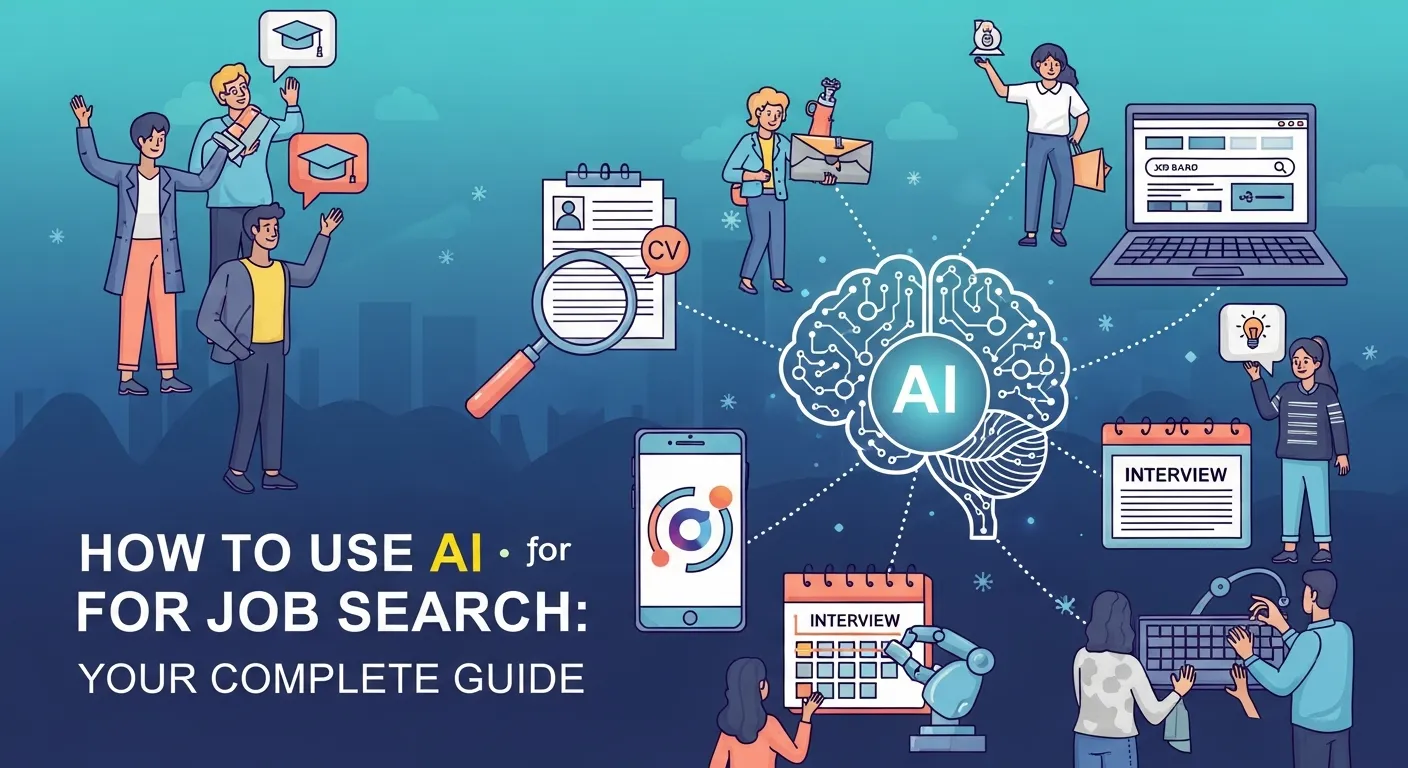
AI has transformed job searching by optimizing resumes, matching candidates to roles, and improving interview preparation. Using AI tools helps job seekers discover opportunities faster, personalize applications, and increase chances of securing interviews successfully overall.
Finding a new career opportunity can feel like navigating a maze. You spend hours browsing open roles, tailoring documents, and preparing for interviews, often with little feedback. However, the recruitment landscape has shifted entirely. Artificial intelligence now powers human resources departments, altering how companies discover and evaluate candidates. This technological shift creates a massive advantage for job seekers who are willing to adapt and learn new strategies.
Understanding how to use AI for job search can transform a frustrating, time-consuming process into a highly efficient operation. From discovering hidden roles to drafting the perfect cover letter, smart tools allow you to present your absolute best self to prospective employers. You no longer have to guess what hiring managers want.
This comprehensive guide will explore practical, proven ways you can leverage artificial intelligence for a more successful career move. We will break down exactly how these systems work, helping you turn potential technical obstacles into your greatest professional advantage.
Understanding the AI Landscape in Recruitment
To succeed in your job hunt, you first need to understand how employers use technology on their end of the hiring pipeline. Recruitment software has evolved rapidly. Algorithms now play a central role in deciding who gets an interview and who gets a rejection email. If you want to master how to use AI for job search, you must first understand the software evaluating you.
AI’s Role in Applicant Tracking Systems (ATS)
Most medium to large companies use an Applicant Tracking System (ATS) to manage incoming applications. These systems do much more than simply store your PDF files in a digital folder. They actively rank candidates based on how well their resumes match the specific job requirements. Algorithms score your application before a human recruiter ever glances at your name.
When you learn how to use AI for job search, you learn how to beat the ATS. The software scans for relevance, experience duration, and specific hard skills. If your document does not align with the algorithm’s parameters, you will automatically move to the rejected pile.
How AI Screens Resumes and Identifies Keywords
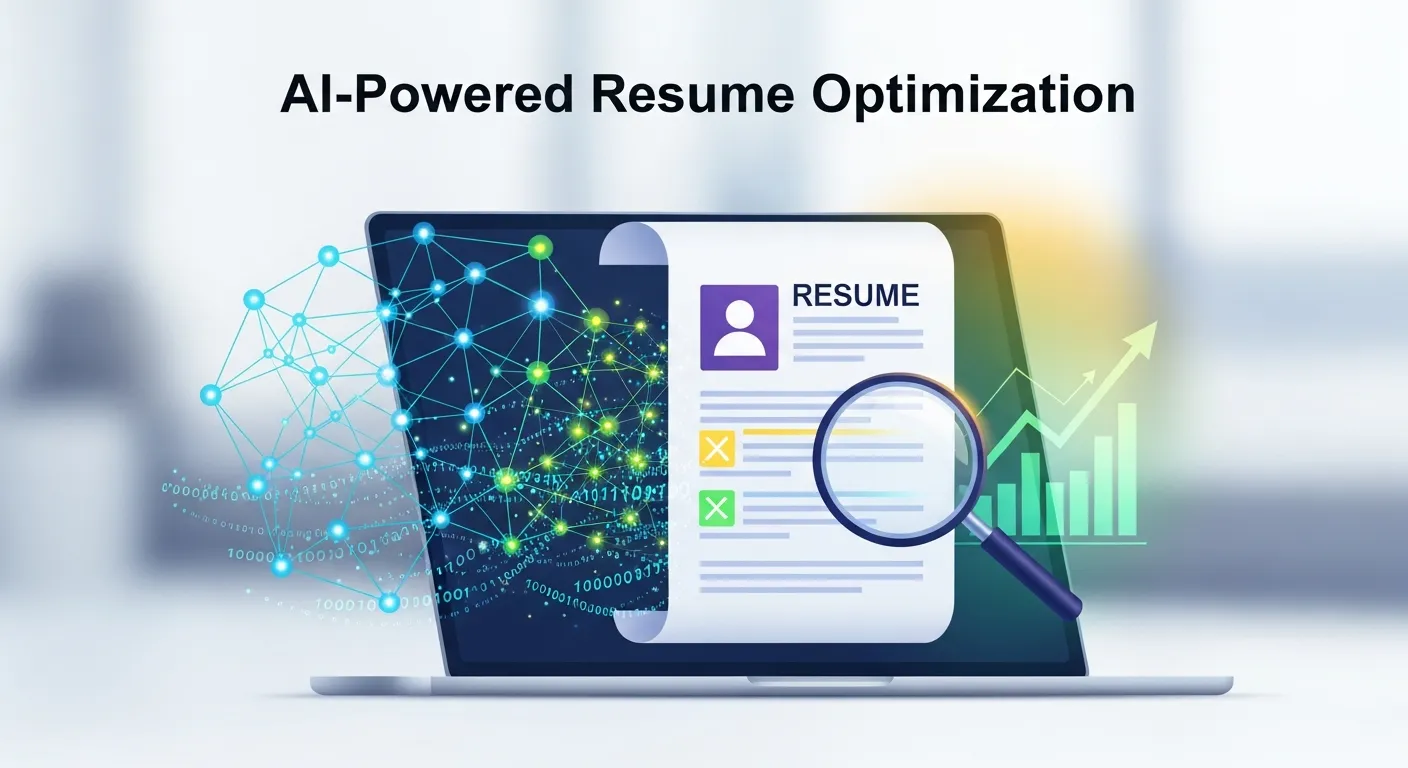
When you submit a resume, the ATS scans the document for specific keywords, skills, and job titles. The software breaks down your experience and compares it against the job description. If the system requires a candidate with “project management” and “agile methodology” experience, and those exact phrases are missing from your document, your application will fail the screening.
To effectively navigate this, you must analyze the job posting meticulously. AI career assistance tools can help you identify the exact phrasing the employer uses. Matching their language word-for-word ensures the scanning software registers your qualifications correctly.
The Importance of Optimizing Your Application for AI
Because algorithms act as the first gatekeeper, optimizing your application for these systems is mandatory. You must format your resume clearly. Avoid complex graphics, tables, or unusual fonts that might confuse the parsing software.
By mirroring the language used in the job description, you signal to the artificial intelligence that you are a highly relevant candidate. This practice is the foundation of knowing how to use AI for job search. It guarantees your well-crafted resume actually reaches human hands.
AI-Powered Resume and Cover Letter Optimization
Using an AI Resume Builder
An AI resume builder is one of the most powerful tools at your disposal. These platforms allow you to copy and paste a job description alongside your current resume. The AI then highlights missing keywords and suggests specific tweaks to align your experience with the open role.
Tools like Jobscan or Teal provide a match percentage, giving you a clear metric to improve upon before you hit the submit button. A good AI resume builder will also help you quantify your achievements, turning vague bullet points into powerful, data-driven statements that catch a recruiter’s eye.
Using AI to Craft Compelling Cover Letters
Cover letters remain an excellent way to show personality and explain career transitions. You can use generative platforms to create a solid first draft. By feeding the AI your resume and the target job description, you can prompt it to write a customized letter that highlights your most relevant achievements.
Always review and edit the output. The goal of using AI career assistance is to save time on the initial draft, not to submit robotic text. Ensure the final letter sounds like your authentic voice and accurately reflects your enthusiasm for the position.
Examples of AI Writing Assistants and Their Features
Beyond basic generation, AI writing assistants help refine your tone and fix grammatical errors. They can identify passive voice, suggest stronger action verbs, and ensure your writing is concise.
- Grammarly: Fixes punctuation and refines sentence structure.
- Hemingway Editor: Highlights complex sentences to improve readability.
- Wordtune: Rewrites phrases to match specific professional tones.
These tools act as a second pair of eyes, ensuring your application materials are polished and professional.
AI for Job Discovery and Matching
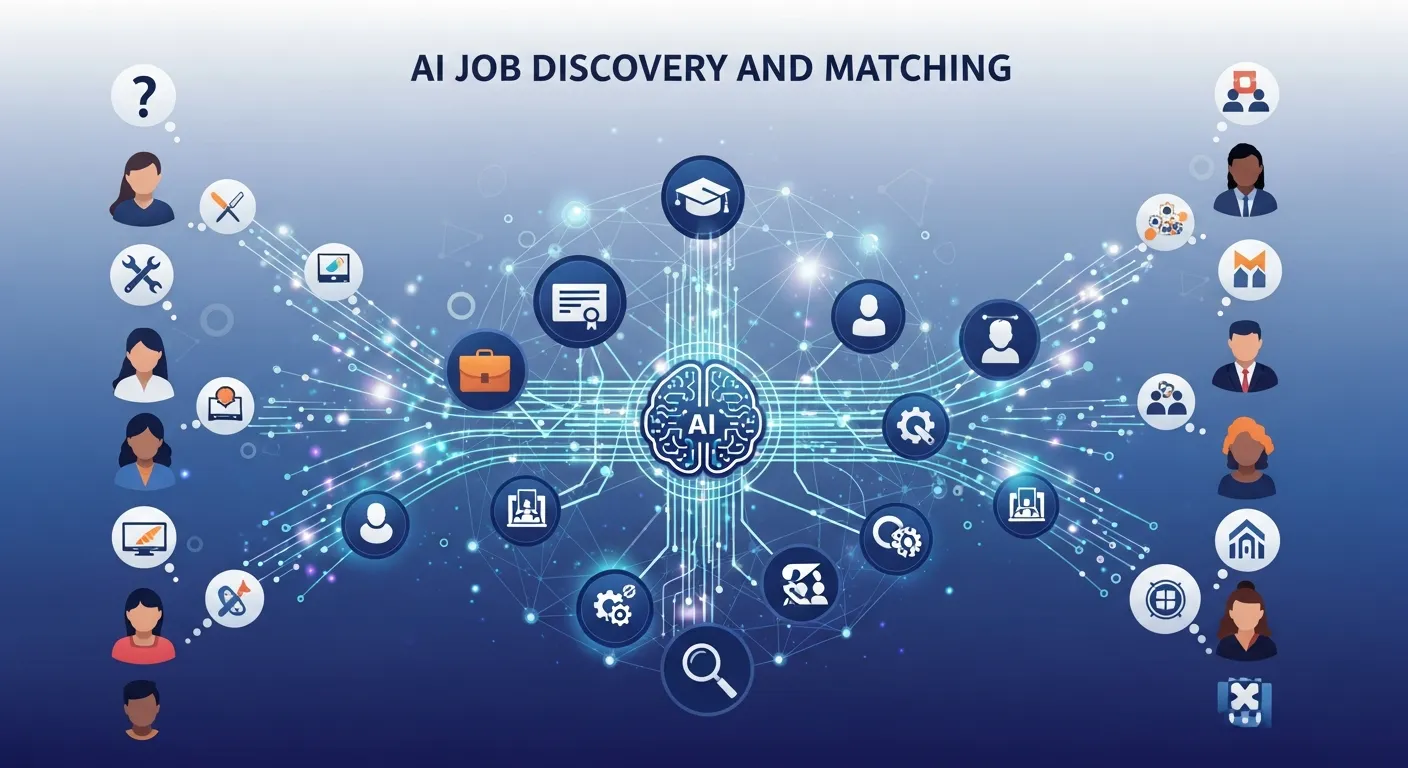
Finding the right job can feel like searching for a needle in a haystack, especially when thousands of listings flood job boards every day. Sorting through them manually is not only time-consuming but often leads to missed opportunities. This is where artificial intelligence becomes a game-changer, acting as a smart filter that narrows down the noise and highlights the roles that truly match your profile.
AI-powered platforms analyze your skills, experience, and preferences to deliver highly relevant job recommendations straight to your inbox. Instead of endlessly scrolling, you receive curated opportunities that align with your career goals. Many tools can even track your behavior—such as the jobs you click on or apply to—and continuously refine their suggestions, making the search process more accurate over time.
Mastering how to use AI for job search means shifting from a reactive approach to a strategic one. Rather than chasing every listing, you allow intelligent algorithms to do the heavy lifting while you focus on preparing strong applications and building meaningful connections. The result is a faster, more targeted, and far less stressful path to finding the right opportunity.
Leveraging AI Job Search Tools
Traditional job boards require manual searching, but modern AI job search tools use machine learning to understand your exact preferences. Platforms like LinkedIn analyze your profile, past searches, and application history to recommend roles that align with your career trajectory.
The more you interact with these platforms, the smarter their recommendations become. By clicking on relevant roles and dismissing irrelevant ones, you train the algorithm to deliver highly targeted opportunities.
Identifying Hidden Job Opportunities
Some roles are never posted on major job boards. AI networking tools can analyze industry trends and company growth signals to predict which organizations are likely to hire soon.
Tracking Company Growth Signals
By tracking funding rounds or leadership changes, algorithms can point you toward companies expanding their teams. This allows you to reach out directly to hiring managers before a job is even officially listed, bypassing the competition entirely.
Exploring AI Career Paths
If you are looking to pivot your career, AI can help you identify roles that match your transferable skills. By analyzing massive datasets of career trajectories, AI career assistance platforms can suggest entirely new industries you may not have considered.
If you want to explore tech-focused transitions, review these AI career paths to see how your current skills align with emerging roles. This targeted research helps you focus your energy on viable, growing sectors.
Mastering AI Interview Preparation
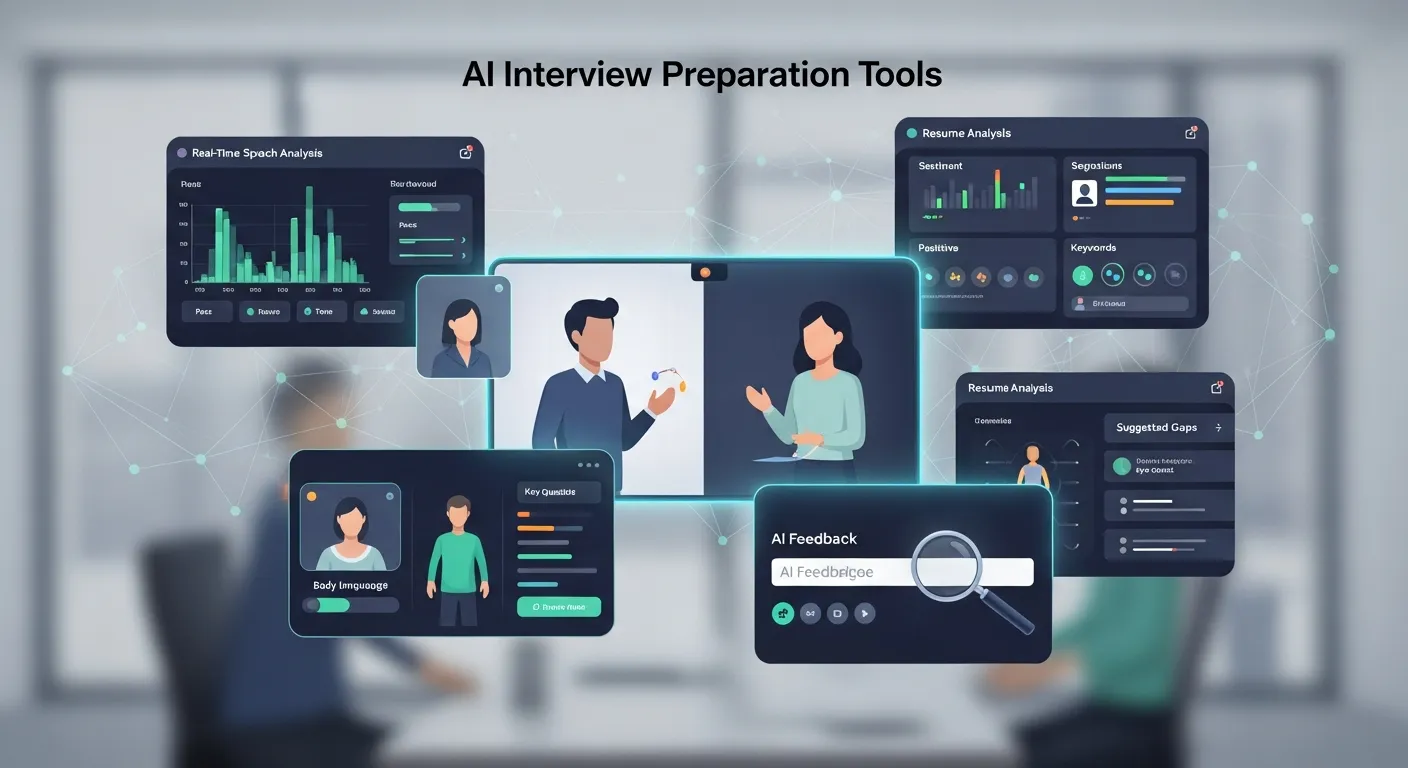
Securing the interview is only half the battle. Artificial intelligence now offers sophisticated ways to practice and perfect your interview technique, giving you confidence before you speak to a hiring manager.
AI-Powered Mock Interview Platforms
You no longer need a friend to run through practice questions with you. AI interview preparation platforms simulate a real interview environment. They ask you relevant questions based on the job description and record your responses. This provides a low-pressure environment to stumble, learn, and improve your answers.
Refining Body Language and Delivery
Advanced video AI tools analyze much more than just your words. They evaluate your eye contact, speaking pace, tone of voice, and use of filler words. After your practice session, the software provides a detailed dashboard showing exactly where you can improve your delivery. This level of AI interview preparation ensures you present yourself as a confident, capable professional.
Answering Common AI Interview Questions
Many companies now use one-way video interviews screened by AI for their initial rounds. These systems look for specific competencies and confidence markers. To succeed, you must speak clearly, maintain steady eye contact with the camera, and structure your answers using the STAR method (Situation, Task, Action, Result).
Advanced AI Techniques for Networking and Branding
Building a professional network and maintaining a strong personal brand are vital components of a successful career strategy. Understanding how to use AI for job search includes leveraging technology to expand your professional circle.
Finding Relevant Industry Contacts
AI-driven networking apps can analyze your background and suggest professionals you should connect with. These tools look for shared interests, alumni connections, or mutual contacts. This takes the guesswork out of building your professional circle and helps you target individuals who can genuinely impact your career.
Personal Branding with AI Career Assistance
Sharing insights on professional platforms helps establish you as an expert in your field. If you struggle with writer’s block, AI can help you brainstorm post ideas, outline articles, and even draft content based on industry news. This allows you to maintain an active, engaging online presence with a fraction of the effort.
Ethical Considerations
While AI is a powerful assistant, authenticity remains crucial. Automating connection requests or using AI to generate insincere comments can damage your reputation. Use technology to find the right people and draft initial ideas, but always inject your own thoughts and genuine interest into your interactions.
Comparing Top AI Job Search Tools
To maximize your strategy, you need the right software stack. Here is a breakdown of common tools used to enhance the job hunt.
|
Tool Category |
Primary Function |
Best Use Case |
|---|---|---|
|
AI Resume Builder |
Keyword matching, formatting |
Beating ATS filters |
|
AI Interview Preparation |
Video analysis, mock questions |
Practicing delivery and tone |
|
AI Job Search Tools |
Aggregating hidden opportunities |
Finding niche roles |
|
Writing Assistants |
Grammar, tone refinement |
Polishing cover letters |
Frequently Asked Questions
How do I start learning how to use AI for job search?
Begin by using an AI resume builder to optimize your current document against a target job description. This shows you immediate areas for improvement. Next, use generative AI to draft cover letters and practice mock interviews.
Can employers tell if I use an AI resume builder?
Employers generally cannot tell if you use an AI resume builder for formatting and keyword optimization. However, they can spot overly robotic language. Always edit the final text to ensure it reflects your genuine voice and experience.
What are the best AI job search tools for finding remote work?
Platforms like LinkedIn and specialized AI aggregators are excellent for filtering remote opportunities. You can also explore specific productivity suites that aid your workflow. Review these AI tools for productivity to keep your remote job search highly organized.
How does AI interview preparation actually work?
AI interview preparation platforms use your webcam and microphone to record your answers to common questions. The software then analyzes your speech rate, filler words, and facial expressions. It provides a score and actionable tips to improve your confidence.
Will using AI career assistance guarantee me a job?
No tool can guarantee a job, as human hiring managers make the final decisions. However, knowing how to use AI for job search drastically increases your chances of securing interviews. It ensures your application is highly relevant and perfectly formatted.
Is it ethical to write my cover letter with AI?
It is completely ethical to use AI to outline and draft your cover letter. The ethical line is crossed if you lie about your skills or submit unedited, robotic text as your own. Treat AI as a collaborative assistant, not a replacement for your input.
How does the ATS algorithm read my resume?
The ATS strips away formatting and parses the text into specific categories like education, experience, and skills. If you use complex tables or images, the algorithm fails to read the text. Use simple, clean formatting to ensure the AI parses your data correctly.
What keywords should I focus on for my industry?
Focus strictly on the hard skills, software names, and job titles listed in the specific job description you are applying for. An AI resume builder can scan the description and highlight exactly which words the algorithm will look for in your document.
How can I use AI to network on LinkedIn?
You can use AI to research companies and draft personalized connection request messages. Generative AI can also help you summarize industry articles to share on your feed. Always personalize the final message to build genuine human connections.
Are free AI job search tools effective?
Yes, many free versions of AI job search tools offer massive value. Free grammar checkers, basic resume scanners, and standard generative AI platforms provide enough assistance to drastically improve your application materials without requiring a paid subscription.
Navigating Your Career Forward
The job search process has undeniably changed, but these advancements offer incredible tools for those willing to learn them. By optimizing your resume for applicant tracking systems, discovering hidden opportunities through smart aggregators, and practicing your interview skills with video analysis, you gain a massive competitive edge.
Embrace artificial intelligence as a powerful ally in your career journey. Experiment with different platforms, refine your approach, and let technology handle the tedious aspects of the hunt. By mastering how to use AI for job search, you combine technical efficiency with your unique human judgment, allowing you to navigate the modern job market with absolute confidence.
