



This guide explores powerful problem solving strategies that help teams drive innovation, generate creative solutions, and build a growth-focused culture. Learn practical techniques, tools, and real-world examples to transform challenges into opportunities.
Organizations face a relentless pace of change that demands agile responses and fresh perspectives. Generating creative solutions has shifted from a simple competitive advantage to an absolute operational imperative. As companies strive to differentiate themselves, the capacity to generate and execute inventive ideas determines market leadership. Teams that master effective Problem Solving Strategies consistently outpace rivals by swiftly adapting to emerging customer needs.
Businesses are doubling down on their innovation pipelines and embedding structured methodologies into daily workflows. This deliberate approach ensures that every new challenge becomes a unique opportunity for growth and development. Rather than viewing obstacles as insurmountable barriers, forward-thinking leaders nurture environments where curiosity thrives. With the right combination of mindset, techniques, tools, and cultural support, any organization can spark continuous innovation.
This comprehensive guide explores the pivotal areas required to master Problem Solving Strategies. We will move from adopting a growth-oriented outlook to leveraging technology and cultivating an innovative ethos. We will also examine real-world case studies to highlight how creative solutions work in practice. By the end of this deep dive, you will possess a clear roadmap to transform challenges into catalytic moments of progress, equipping your teams to drive innovation with absolute confidence.
Embracing a Growth-Oriented Mindset for Innovation
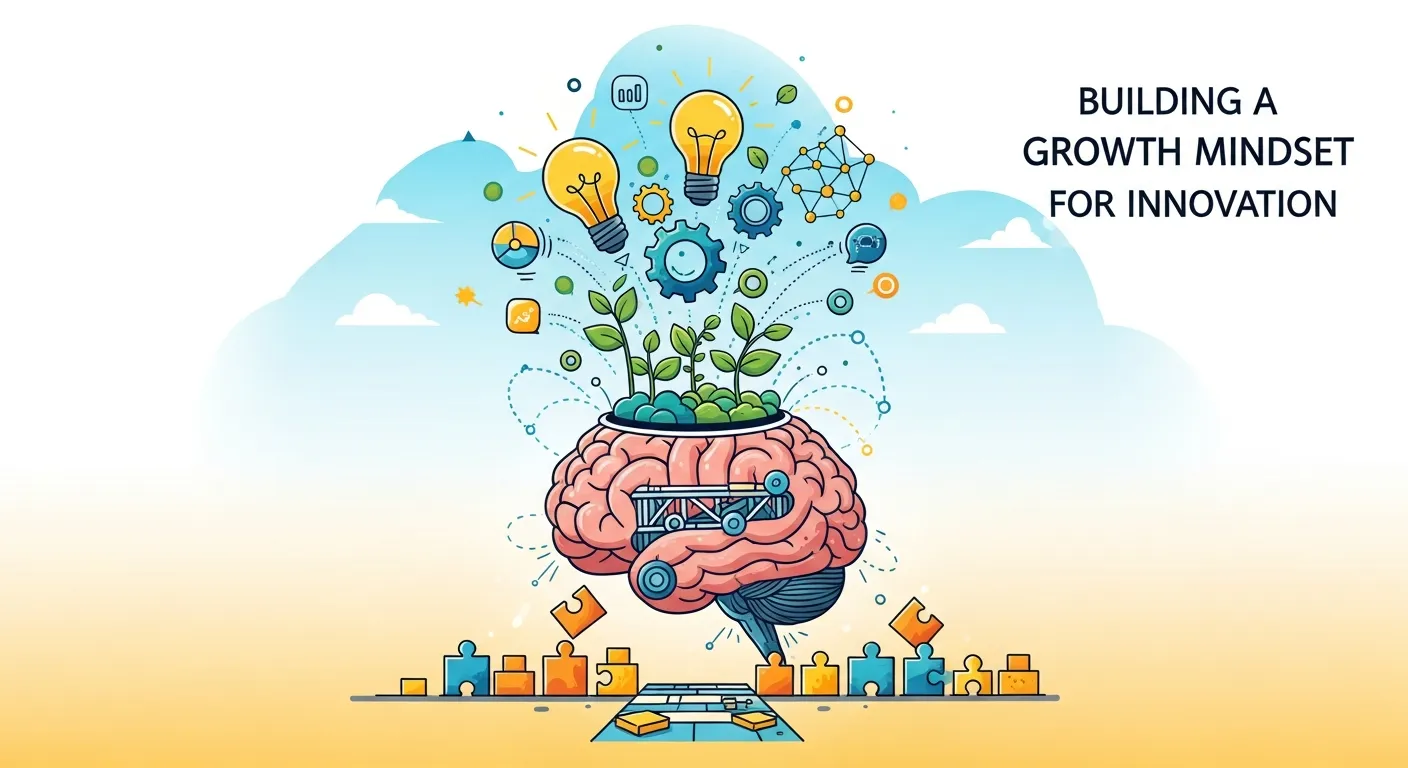
Effective Problem Solving Strategies begin with the fundamental beliefs held by individuals and teams. To cultivate a mindset highly conducive to innovation, organizations must acknowledge that solutions are not preordained. Teams shape outcomes through relentless experimentation and collective, diverse insight. Leading thinkers advocate shifting from fixed assumptions to a growth-oriented approach that prizes discovery over absolute certainty.
This vital transition requires deliberate actions aimed at fostering deep curiosity and reframing the concept of failure. It also demands absolute psychological safety within the workplace. Implementing Problem Solving Strategies without a supportive mindset often leads to stagnation and frustration.
Fostering Unrelenting Curiosity
Encouraging curiosity means embedding “what if” scenarios into everyday corporate conversations. Teams can host weekly open forums or create digital suggestion boxes where unconventional ideas receive warm welcomes. Regularly challenging entrenched assumptions leads directly to more robust creative solutions. By asking questions like “What if we tried the exact opposite?”, employees learn to see beyond established boundaries.
Organizations that prioritize curiosity naturally develop superior Problem Solving Strategies over time. They refuse to accept the status quo, constantly probing for better methods and unexplored pathways. This continuous questioning serves as the bedrock of lasting innovation.
Implementing Curiosity Checkpoints
Managers can implement curiosity checkpoints during standard project reviews. These dedicated moments force teams to pause and evaluate if they are relying too heavily on past precedent. Injecting these checkpoints ensures that creative solutions remain at the forefront of the planning process.
Reframing Failure as a Catalyst
Reframing failure as a powerful learning catalyst remains equally vital for true innovation. In many traditional environments, mistakes carry a heavy stigma that completely stifles risk-taking. Instead, leaders should celebrate rapid prototypes and early setbacks as highly valuable data points. Instituting post-mortem reviews where teams document lessons learned turns each misstep into a springboard for progress.
Over time, this normalization of productive failure reduces fear and massively accelerates experimentation. Problem Solving Strategies must account for failure as a natural step in the discovery process. Without the freedom to fail, creative solutions simply cannot materialize.
Explore the behavioral aspects of problem-solving.
Cultivating Psychological Safety
Psychological safety completely underpins any serious effort to unlock a team’s creative potential. When individuals feel secure speaking up without fear of ridicule or retribution, ideation naturally flourishes. Simple practices can transform group dynamics and vastly improve Problem Solving Strategies. Try rotating meeting facilitators, inviting quiet voices to contribute, and publicly acknowledging diverse viewpoints.
By building an inclusive atmosphere where every single team member feels heard, organizations lay a strong foundation. This foundation supports sustained creative solutions and long-term innovation. Psychological safety removes the friction that typically slows down the development of new Problem Solving Strategies.
Techniques for Generating Creative Solutions
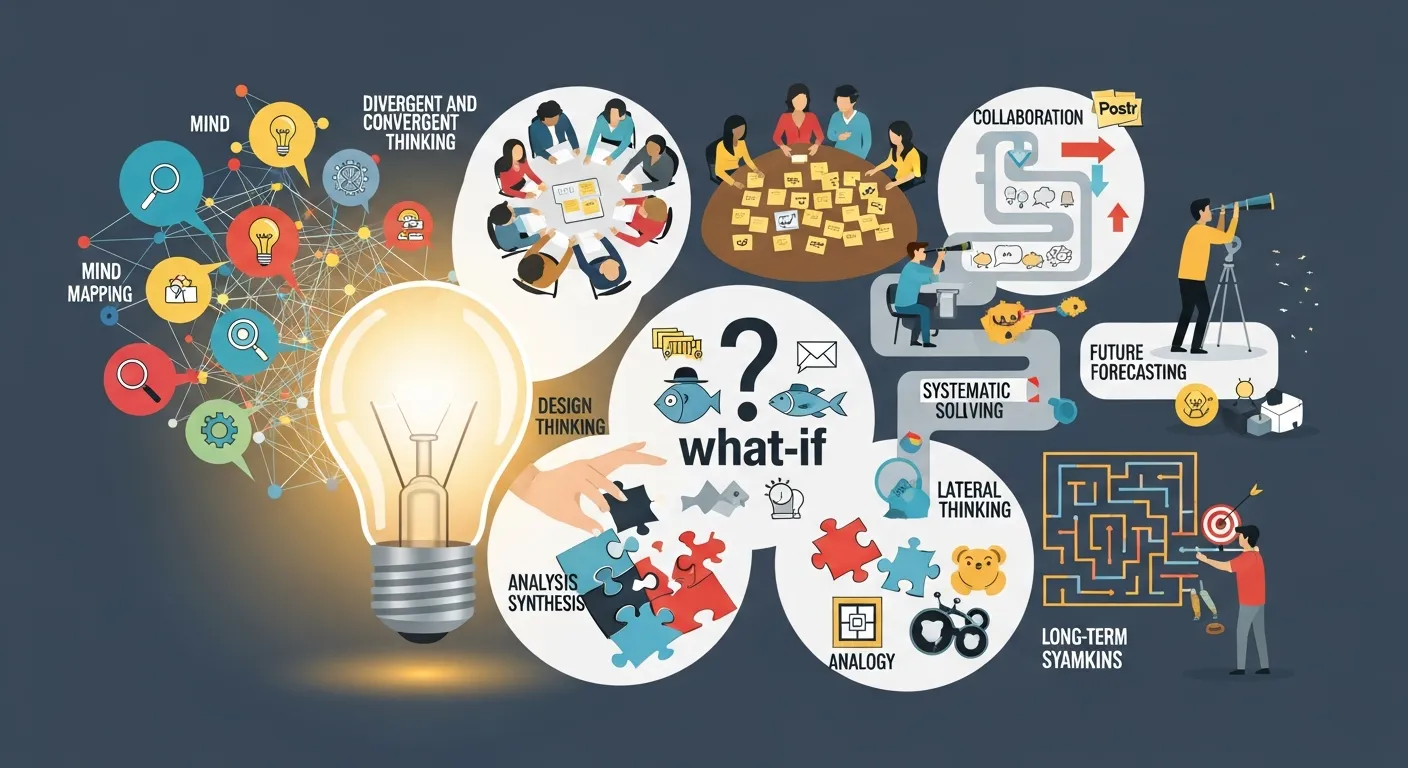
With the right mindset firmly in place, structured methodologies provide necessary frameworks. These frameworks direct creative energy toward highly tangible, profitable outcomes. While free-form ideation has merits, combining strict discipline with wild imagination yields much more reliable results. Below, we explore several proven Problem Solving Strategies that teams can tailor to any context.
Brainstorming 2.0
Traditional brainstorming often stumbles when dominant personalities monopolize sessions or when ideas stagnate under groupthink. An upgraded approach, commonly called Brainstorming 2.0, introduces helpful structure to spark a much wider range of concepts. This technique stands out among Problem Solving Strategies for its sheer versatility and speed.
Time-Boxed Sprints
Allocate five-minute sprints where participants write down as many ideas as physically possible. The intense pressure to think quickly tends to bypass internal self-censorship completely. This rapid-fire method frequently produces the most unexpected and brilliant creative solutions.
Role-Storming
Invite team members to adopt the persona of a renowned figure from history or business. Ask them to brainstorm from that specific, unusual vantage point to break mental ruts. Viewing a problem through the lens of a completely different industry often sparks radical innovation.
Reverse Brainstorming
Start the session by asking the group how they could intentionally worsen the specific issue. Once the team generates negative ideas, invert those suggestions into highly constructive, creative solutions. This unique psychological trick ranks among the most effective Problem Solving Strategies available.
The SCAMPER Framework
The SCAMPER framework provides a systematic, highly effective checklist for innovation. It encourages teams to examine existing products, services, or internal processes through multiple distinct lenses. By walking through each detailed prompt, participants uncover massive opportunities that might otherwise remain entirely hidden.
|
SCAMPER Letter |
Meaning |
Application for Creative Solutions |
|---|---|---|
|
S |
Substitute |
Replace components or resources with more effective, innovative alternatives. |
|
C |
Combine |
Merge two seemingly unrelated ideas to create powerful new synergy. |
|
A |
Adapt |
Borrow successful solutions from completely different industries or markets. |
|
M |
Modify |
Scale features up or down to change the core value proposition. |
|
P |
Put to Another Use |
Find ways existing assets can serve entirely new audiences. |
|
E |
Eliminate |
Remove bloated processes, features, or steps to streamline operations. |
|
R |
Reverse |
Invert sequences or roles to see how the system functions backward. |
Using the SCAMPER method transforms vague brainstorming into highly targeted Problem Solving Strategies. It forces the brain to attack a problem from seven different angles, guaranteeing a wealth of creative solutions.
Design Thinking for Empathy
Design thinking prioritizes deep empathy and human-centric insights throughout five highly iterative phases. These phases include Empathize, Define, Ideate, Prototype, and Test. This specific method ensures that creative solutions align perfectly with real user needs rather than abstract, internal assumptions.
Design thinking converges qualitative research with rapid prototyping to validate new hypotheses quickly. Teams conduct user interviews, shadow end users in their environment, and build simple, low-fidelity mockups. By cycling rapidly through iterations, the risk of launching misaligned offerings drops significantly. This approach represents the gold standard of modern Problem Solving Strategies.
Mind Mapping Visuals
Mind mapping harnesses the immense power of visual association to drive innovation. Starting with a central challenge written in the middle of a board, participants branch out into related themes. Digital platforms facilitate real-time collaboration, allowing dispersed, remote teams to co-create expansive, detailed diagrams.
This visual approach reveals hidden patterns and relationships that linear note-taking almost always misses. It makes identifying high-impact pathways for creative solutions much easier for the entire group. Mind mapping serves as one of the most accessible Problem Solving Strategies for teams of all sizes.
Leveraging Technology to Boost Innovation
Digital tools can drastically amplify your Problem Solving Strategies by streamlining collaboration, rapid prototyping, and complex analysis. Integrating the absolute right platforms not only accelerates ideation but also records vital institutional knowledge. Technology acts as a massive force multiplier for generating creative solutions and sustaining long-term innovation.
Collaboration Hubs and Communication
Platforms such as Slack, Microsoft Teams, and Asana serve as centralized spaces to manage complex conversations. They track action items and host shared files, preventing creative insights from getting lost in endless email threads. Teams can easily set up dedicated channels strictly for innovation topics to ensure high visibility.
These hubs encourage cross-functional exchange, which is critical for developing robust Problem Solving Strategies. When different departments communicate seamlessly, the quality of creative solutions skyrockets.
Discover effective Problem Solving Strategies.
Digital Whiteboards
Tools like Miro, MURAL, and Google Jamboard completely recreate the tactile experience of sticky notes on a virtual canvas. Distributed team members can draw rough sketches, cluster concepts, and vote on their favorites in real time. Version history features capture every single iteration, preventing any loss of valuable creative solutions.
Commenting functions enable asynchronous feedback, which remains absolutely critical for global, remote organizations. Digital whiteboards have become indispensable tools for modern Problem Solving Strategies. They allow innovation to happen regardless of geographical boundaries.
AI-Assisted Ideation
Artificial intelligence is rapidly emerging as a powerful, highly capable creative ally. AI assistants can propose unique prompts, synthesize massive research summaries, or draft outlines for brainstorming sessions. By automating routine tasks, AI allows human teams to focus entirely on evaluating and refining high-potential concepts.
AI tools can generate divergent idea lists in seconds, accelerating the early stages of Problem Solving Strategies. This synergy between human intuition and machine processing represents the cutting edge of innovation. It ensures that teams never stare at a blank page when searching for creative solutions.
Rapid Prototyping Software
Designers and product managers leverage modern software to produce interactive mockups with minimal to no coding required. These specialized tools facilitate the incredibly quick visualization of complex user journeys. They make it much easier to communicate abstract ideas and creative solutions to non-technical stakeholders.
Integrated user-testing plugins allow these prototypes to be shared instantly for vital feedback loops. This drastically reduces development lead times and saves significant capital. Rapid prototyping sits at the very heart of execution-focused Problem Solving Strategies.
Analytics and Visualization Dashboards
Once teams put creative solutions into motion, monitoring key performance indicators in real time becomes essential. Platforms like Tableau or Power BI help teams carefully track metrics such as time to market and user adoption rates. Tracking the direct return on innovation investments proves the ultimate value of these efforts.
Visual dashboards make it incredibly simple to spot dangerous bottlenecks and course-correct promptly. Data-driven insights ensure that your Problem Solving Strategies actually deliver measurable, positive business outcomes. Innovation without measurement quickly devolves into wasted effort.
Fostering a Culture of Innovation
Tools and techniques only reach their absolute full potential when supported by a vibrant, welcoming corporate culture. Building an environment where creative solutions thrive involves intentional strategies that empower individuals deeply. You must celebrate collective achievements and reward those who actively participate in your Problem Solving Strategies.
Cross-Functional Collaboration
True innovation almost always occurs at the busy intersection of completely diverse disciplines. Bringing together marketing strategists, software engineers, and customer success managers introduces a massive variety of lenses. Regularly rotating team compositions actively prevents siloed thinking and sparks fresh, exciting connections.
When people from different backgrounds collaborate, they combine their unique Problem Solving Strategies. This cross-pollination of ideas reliably generates the most groundbreaking creative solutions. Organizations must actively break down departmental walls to foster this level of innovation.
Idea Incubators and Passion Projects
Allocating dedicated time to side projects or innovation incubators deeply encourages employees to explore passion-driven initiatives. By institutionalizing these specific blocks of free-form exploration, organizations send a clear signal of trust. They demonstrate that they value employee creativity just as much as standard productivity.
These incubators provide a safe sandbox for testing unproven Problem Solving Strategies without risking core business operations. Many of the world’s most profitable creative solutions originated as small, passionate side projects. Giving employees the bandwidth to tinker is essential for sustained innovation.
Innovation Challenges and Hackathons
Periodic corporate events like hackathons or intense design sprints inject massive adrenaline into the innovation pipeline. By setting incredibly clear problem statements and offering resources, companies generate large volumes of actionable ideas. Hackathons compress months of Problem Solving Strategies into a single, highly energetic weekend.
Incentivizing participation with tangible rewards, public recognition, or leadership opportunities further motivates cross-team involvement. These events prove that generating creative solutions can be both fun and highly competitive. They serve as a powerful cultural reinforcement for ongoing innovation.
Recognition and Reward Systems
Positive reinforcement actively amplifies desired corporate behaviors and cements your new Problem Solving Strategies. Establish formal programs that publicly showcase successful experiments and creative solutions. Highlighting tangible successes and attributing credit transparently builds massive organizational momentum.
Whether through internal newsletters, grand award ceremonies, or lucrative performance bonuses, reward those who drive innovation. This reinforces the core message that generating creative solutions is a highly valued, core organizational competency.
Case Studies: Problem Solving Strategies in Action
Examining real-world examples brilliantly illuminates exactly how theoretical frameworks translate into massive, impactful results. Below are notable cases that demonstrate highly diverse, successful applications of modern Problem Solving Strategies. These examples prove that innovation can rescue struggling companies and propel growth.
The Airbnb Growth Hack
Facing severe user engagement plateaus, Airbnb’s early team engineered a brilliant, low-cost lateral solution. They automated the cross-posting of their unique property listings directly onto Craigslist. By writing custom scripts that perfectly mimicked manual posting, Airbnb dramatically increased their listing exposure.
They achieved this massive visibility without spending major capital on traditional advertising campaigns. This pragmatic application of reverse brainstorming fueled exponential user growth and saved the startup. It underscores the incredible, raw power of utilizing unconventional Problem Solving Strategies to generate creative solutions.
LEGO’s Community-Driven Reinvention
At the absolute brink of financial collapse, LEGO wisely tapped into its massive, passionate adult fan base. They launched the LEGO Ideas platform, entirely crowdsourcing new design submissions from their users. By granting royalties to winning contributors, the company reignited consumer passion and secured novel concepts.
Over five years, this participatory approach contributed directly to a staggering 250% revenue increase. This case perfectly showcases how psychological safety and deep user empowerment drive massive innovation. LEGO’s turnaround remains one of the best examples of collaborative Problem Solving Strategies in corporate history.
Starbucks’ Mobile Ordering Transformation
Starbucks launched its highly popular mobile order-and-pay feature after intensive user testing in select, targeted markets. Through highly iterative design sprints and rapid prototype trials, the company refined the app interface continuously. They focused relentlessly on minimizing customer friction and improving the overall user journey.
As a direct result of these creative solutions, in-store wait times dropped by an impressive 80%. Average transaction sizes also grew significantly, boosting overall corporate revenue. By strictly tracking metrics like adoption rate, Starbucks continuously optimized their Problem Solving Strategies for maximum innovation.
Measuring the Success of Creative Solutions

To properly gauge the true impact of creative initiatives, organizations must strictly monitor relevant KPIs. You should track the exact time to market and the overall adoption rates of new internal processes. Calculating the exact ROI on innovations and monitoring idea pipeline velocity ensures your Problem Solving Strategies actually work.
Conducting Regular Retrospectives
Regular team retrospectives quickly reveal hidden patterns, highlighting exactly what works and where immediate adjustments are needed. Over time, these highly data-informed cycles ensure that your creative solutions evolve efficiently. They keep your innovation efforts perfectly in step with rapidly changing business landscapes.
Adjusting the Innovation Pipeline
If metrics show that ideas are stalling, you must adjust your Problem Solving Strategies accordingly. Perhaps the team needs more digital tools, or maybe the culture lacks necessary psychological safety. Continuous measurement guarantees that your pursuit of creative solutions remains a profitable, sustainable endeavor.
Expanding Problem Solving Strategies Across Departments
To truly harness the power of innovation, Problem Solving Strategies must not remain confined to the R&D or product teams. Every single department, from human resources to finance, benefits massively from applying creative solutions to their specific workflows. When an entire organization adopts an innovation mindset, the collective output becomes unstoppable.
Innovation in Human Resources
Human resources departments face complex challenges regarding employee retention, engagement, and talent acquisition. By applying Problem Solving Strategies, HR teams can design highly creative solutions for onboarding and training. For example, using design thinking to map the candidate journey often reveals critical pain points that traditional surveys miss entirely.
HR can implement hackathons focused strictly on improving workplace culture or benefits packages. This approach ensures that the pursuit of innovation directly impacts the daily lives of the employees. When staff see creative solutions applied to their own well-being, their engagement and loyalty skyrocket.
Creative Solutions in Finance
Finance departments are traditionally viewed as rigid and strictly bound by rules, but they too require robust Problem Solving Strategies. Financial analysts can use creative solutions to streamline complex reporting, automate tedious data entry, and visualize budget forecasts. Applying the SCAMPER framework to existing financial approval processes often eliminates massive bureaucratic bottlenecks.
Innovation in finance might look like adopting new AI-driven predictive modeling tools to forecast market shifts. By embracing Problem Solving Strategies, finance professionals transition from mere gatekeepers to highly strategic, innovative business partners.
Marketing and Sales Innovation
Marketing and sales teams thrive on generating highly creative solutions to capture customer attention and close deals. Brainstorming 2.0 and mind mapping are essential Problem Solving Strategies for developing breakthrough advertising campaigns. These teams must constantly innovate to stand out in an incredibly noisy, saturated digital landscape.
Sales teams can use rapid prototyping to test new pitch decks or outreach cadences before rolling them out globally. By continuously measuring the success of these creative solutions, marketing and sales remain agile and highly competitive. Innovation is the lifeblood of customer acquisition and brand growth.
Overcoming Common Barriers to Innovation
Even with the best Problem Solving Strategies in place, organizations inevitably encounter tough barriers that threaten to derail creative solutions. Identifying and proactively dismantling these obstacles is absolutely critical for maintaining a healthy, vibrant culture of continuous innovation.
The Barrier of Past Precedent
The most dangerous phrase in any corporate environment is claiming that things have always been done a certain way. This mindset completely neutralizes Problem Solving Strategies and suffocates any potential for creative solutions. Leaders must actively challenge this toxic complacency by demanding fresh perspectives and requiring teams to justify legacy processes.
To break this barrier, mandate that every quarterly review includes at least one radically new proposal. Forcing teams to exercise their innovation muscles prevents operational stagnation and encourages the continuous pursuit of creative solutions.
Lack of Dedicated Time and Resources
Teams cannot develop brilliant Problem Solving Strategies if they are completely buried under daily, routine operational tasks. A severe lack of dedicated time is the primary killer of creative solutions and corporate innovation. Leadership must fiercely protect the time allocated for brainstorming, prototyping, and deep, focused thinking.
Provide teams with the necessary budget to acquire digital whiteboards, rapid prototyping software, and AI assistants. When organizations refuse to invest time and money into Problem Solving Strategies, they guarantee their own eventual obsolescence. Innovation requires deliberate, consistent investment to yield actual results.
Fear of Leadership Reprisal
If leadership punishes failed experiments, employees will immediately cease offering creative solutions. This fear of reprisal destroys psychological safety and renders all Problem Solving Strategies completely useless. Leaders must publicly own their own failures and praise teams that take calculated, intelligent risks, regardless of the final outcome.
When executives model vulnerability, it gives the entire organization permission to push boundaries and pursue true innovation. Protecting the psychological safety of the team is the most important leadership duty when implementing Problem Solving Strategies.
Frequently Asked Questions (FAQ)
What exactly are Problem Solving Strategies?
Problem Solving Strategies are highly structured, deliberate approaches used to generate and implement innovative, effective solutions. They combine both divergent and convergent thinking methods to successfully navigate ambiguity and workplace uncertainty. Utilizing these strategies helps teams overcome complex hurdles efficiently.
How can organizations actively foster creativity?
Organizations foster creativity by heavily encouraging a growth-oriented mindset and normalizing highly productive failure. They must ensure absolute psychological safety and provide structured ideation techniques for all employees. These environments naturally invite diverse perspectives and drive continuous innovation.
Which digital tools best support the creative process?
Digital whiteboards, advanced AI-assisted ideation platforms, and rapid prototyping software heavily support the creative process. Collaboration hubs and deep analytics dashboards also vastly accelerate ideation, feedback, and iterative development. These tools make executing Problem Solving Strategies much easier.
Why is psychological safety important for creative solutions?
When employees feel completely safe from ridicule or harsh punishment, they share their most unconventional, brilliant ideas. Psychological safety removes the fear of failure, which is the biggest blocker to true innovation. It allows Problem Solving Strategies to flourish naturally without internal friction.
How does the SCAMPER framework drive innovation?
The SCAMPER framework forces teams to examine existing problems through seven distinct, challenging lenses. By prompting users to substitute, combine, or reverse elements, it uncovers highly unexpected creative solutions. It is one of the most reliable Problem Solving Strategies for product development.
What is the role of AI in Problem Solving Strategies?
AI acts as a powerful catalyst by rapidly generating divergent ideas, synthesizing research, and automating tedious tasks. It frees human workers to focus strictly on refining and executing complex creative solutions. Review our guide on mastering creative solutions techniques.
How does design thinking guarantee better outcomes?
Design thinking strictly prioritizes deep human empathy and rapid, iterative prototyping above all else. It ensures that all creative solutions actually address real, validated user needs rather than internal corporate assumptions. This makes it an incredibly effective framework for customer-centric innovation.
Can small teams execute complex Problem Solving Strategies?
Absolutely, small teams are often much more agile and can implement new Problem Solving Strategies much faster than massive corporations. They can easily adopt Brainstorming 2.0 or mind mapping to generate incredible creative solutions. Size does not limit a team’s capacity for high-level innovation.
How do you measure the success of creative solutions?
You measure success by tracking specific KPIs like time to market, user adoption rates, and overall return on investment. Regular retrospectives help identify exactly which Problem Solving Strategies yield the best, most profitable results. Read more on harnessing creative solutions.
Why do traditional brainstorming sessions often fail?
Traditional brainstorming often fails because loud, dominant personalities easily monopolize the conversation and stifle quieter voices. Brainstorming 2.0 introduces strict time boxes and role-playing to democratize the ideation process completely. This ensures a much higher volume of truly diverse, innovative creative solutions.
Conclusion
Mastering Problem Solving Strategies equips organizations to pivot rapidly in an unpredictable landscape. It allows teams to uncover hidden market opportunities and deliver vastly superior value to their customers. By fully embracing a growth-focused mindset and applying structured methods like SCAMPER, teams navigate complex challenges easily.
Leveraging modern digital platforms—from AI copilots to highly collaborative virtual whiteboards—further guarantees your success. Cultivating a corporate culture that actively rewards experimentation and fosters cross-functional synergy amplifies your innovation efforts massively. The companies that thrive and dominate their industries view every single hurdle as a springboard for discovery and creative solutions.
Start embedding these vital principles into your daily operations immediately. Regularly audit your workflows to identify creativity blockers, and pilot new Problem Solving Strategies in targeted teams. With clear metrics guiding your continuous iteration, you will transform creative solutions from a one-off initiative into a sustainable organizational superpower. Begin your dedicated innovation journey right now.
