


Creative solutions empower organizations to innovate, adapt, and outperform competitors. By combining structured frameworks, psychological insight, and collaborative practices, teams can transform challenges into opportunities while building a sustainable culture of continuous innovation and growth.
Organizations that embrace creative solutions consistently outpace their competitors. They deepen customer loyalty and inspire their internal teams to achieve greatness. Creative solutions involve much more than finding quick fixes for immediate problems. They require a dedicated mindset that reframes complex challenges and forges unexpected connections. By nurturing fresh ideas, companies create a lasting impact on their industries.
Professionals across all sectors now recognize that mastering creative solutions remains essential. Teams must stay agile amid rapid technological advances and shifting market demands. Whether you lead a product development team or reengineer global supply chains, you need a strong approach. Adopting structured innovation practices transforms how your team conquers difficult hurdles.
This comprehensive guide outlines the foundational principles of creative solutions. We explore the psychology that underpins innovative thought and review proven methods to generate breakthrough ideas. You will learn how to embed these essential practices into your everyday workflows. By the end of this deep dive, you will possess the tools to cultivate a robust culture of experimentation. You will measure the impact of your initiatives and ensure that innovation becomes an integral part of your organization’s DNA.
The Foundations of Creative Solutions and Innovation
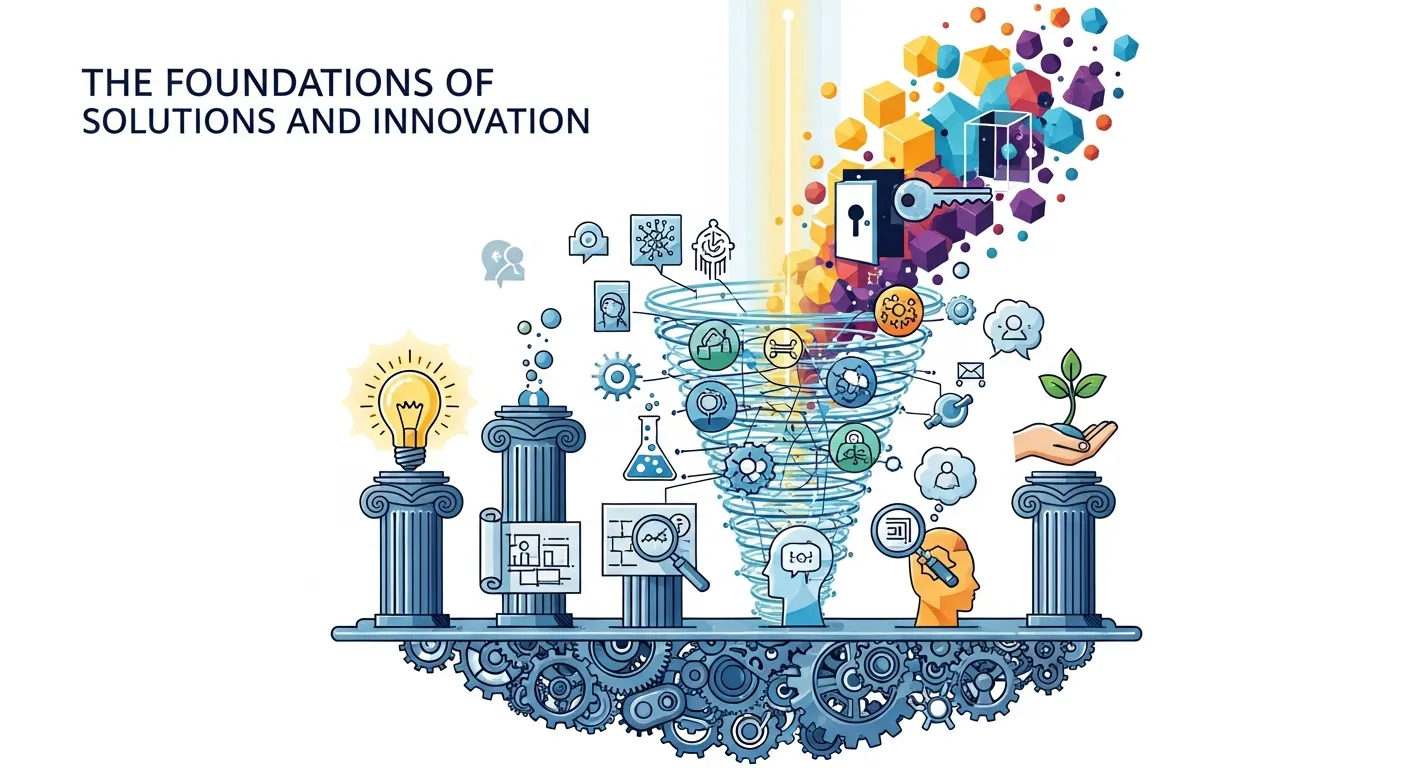
Creative solutions differ massively from routine problem-solving methods. They challenge deep-seated assumptions and generate entirely new approaches to old problems. Instead of following predefined procedures, teams explore novel combinations. They test radical concepts and iterate rapidly toward transformative results.
At the heart of this innovation lies a systematic process. This process strongly encourages exploration, constructive feedback, and rapid prototyping.
The Core Components of a Creative Framework
To build a robust framework for creative solutions, you must establish strong foundational habits. These habits ensure that innovation happens by design rather than by chance. Expanding on these principles can turn sporadic creativity into a sustainable organizational ability.
Problem Reframing
Transforming the way you articulate a challenge often opens unexpected paths. If you ask, “Why are customers dropping off?” you might only find negative answers. However, asking, “How might we simplify the user onboarding experience?” yields actionable ideas. Proper problem reframing sits at the very center of effective creative solutions.
Effective reframing can also benefit from techniques such as the 5 Whys and cause-and-effect diagrams. Start by restating the challenge from multiple viewpoints. Involve stakeholders in co-creating the question. This collaborative approach not only sparks fresh thinking, but also encourages buy-in for the solutions that follow.
Concept Aggregation
Merging insights from completely diverse domains sparks incredible synergy. For example, applying popular gaming mechanics to corporate training modules produces innovative educational offerings. Concept aggregation forces the brain to connect ideas that normally remain separate. This leads directly to breakthrough innovation.
Encourage team members to bring trend research or unique personal experiences into idea-generation sessions. Hold regular “inspiration exchanges” where employees can share new tools or cross-industry case studies. This ongoing practice feeds a pipeline of raw material essential for true creative solutions and innovation.
Experimentation Rituals
Establishing short, time-boxed cycles for building and testing prototypes greatly reduces risk. Many agile software teams adopt two-week sprints specifically for this reason. These experimentation rituals accelerate learning and allow teams to pivot quickly.
Consider launching internal “innovation labs” or reserving funds for rapid experimentation. Track which rituals yield the most learning per dollar spent. This transparency makes it easier for leadership to justify further investment in creative solutions and supports a culture of hands-on innovation.
Inclusive Collaboration
Involving cross-functional stakeholders ensures that ideas face stress tests from multiple angles. Bring designers, engineers, marketers, and customers into the room together. Inclusive collaboration guarantees that your creative solutions remain practical and highly relevant to the end user.
To drive more effective collaboration, pilot rotating leadership roles and “buddy” systems that pair team members from different backgrounds. Use digital platforms to crowdsource ideas beyond your immediate team. These strategies ensure that the momentum of innovation does not become siloed.
Understanding the Mental Processes Behind Innovation

Understanding the mental processes that fuel creative solutions empowers leaders to remove internal barriers. It helps managers foster an environment highly conducive to novel thinking. Psychological studies reveal that innovation thrives when individuals balance divergent and convergent thinking successfully.
Divergent thinking heavily encourages the generation of numerous, varied ideas without judgment. Convergent thinking then evaluates those ideas and refines them into highly practical strategies.
Key Psychological Drivers for Creative Solutions
Several specific psychological factors influence a team’s ability to generate creative solutions. Leaders must understand these drivers to unlock their team’s full potential for continuous innovation.
Intrinsic Motivation
Individuals who pursue tasks for the sheer joy of discovery often delve much deeper. They remain persistent through frustrating setbacks and failures. Organizations enhance intrinsic motivation by aligning assigned projects directly with personal interests. When employees care about the outcome, their capacity for innovation skyrockets.
To foster intrinsic motivation, offer autonomy, purpose, and opportunities for mastery. Recognize not only outcomes but also creative efforts in regular reviews. Building a system that rewards learning and experimentation adds powerful momentum to innovation.
Cognitive Flexibility
Cognitive flexibility represents the capacity to shift mental gears quickly. Adapting old mental schemas to brand-new contexts enables teams to break free from linear thought patterns. Encouraging perspective-taking exercises greatly strengthens this mental agility.
Consider hosting “perspective swaps,” where roles or project assumptions are deliberately exchanged. Build flexibility by celebrating challenges that lead to the discovery of new creative solutions.
Risk Tolerance
Accepting the real possibility of failure lowers the psychological barrier to proposing bold concepts. Establishing safe-to-fail pilots helps participants experiment freely. They can test creative solutions without fearing harsh reprimands for imperfect outcomes.
Learn from both “brilliant failures” and unexpected wins. Hold story sessions that highlight how responsible risk-taking led to valuable insights—even if initial attempts fell short of the mark. These stories strengthen your organization’s risk resilience.
Psychological Safety
When team members feel completely secure sharing unorthodox ideas, overall innovation output increases massively. Leaders build this climate through open dialogue and active listening. Celebrating experimentation, even when it fails, guarantees a steady flow of creative solutions.
Host anonymous feedback channels and set clear ground rules for constructive critique. Psychological safety can also be enhanced through peer mentoring and transparent leadership communication.
Effective Methods for Generating Breakthrough Ideas
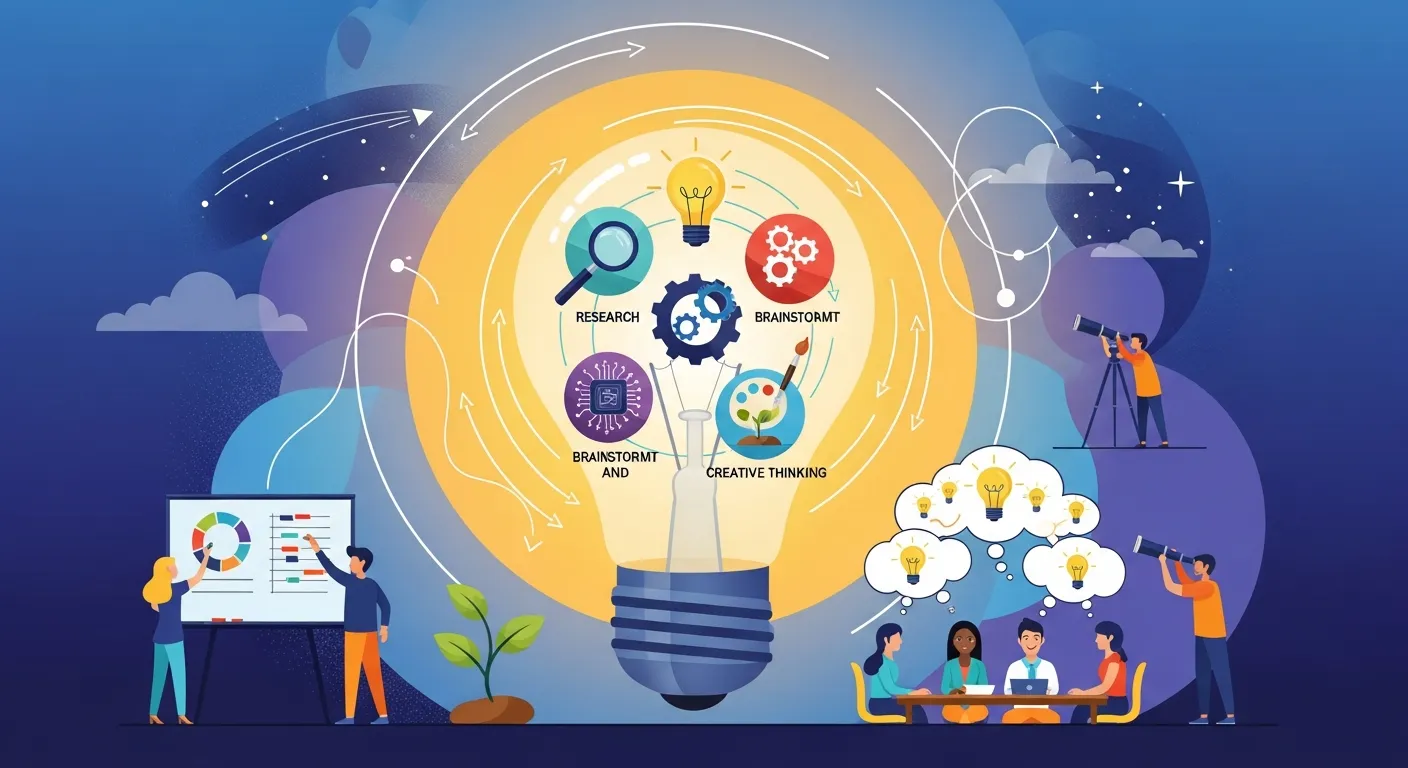
Structured techniques serve as powerful catalysts for creative solutions. They guide busy teams from initial sparks to concrete, profitable concepts. Below, we review widely adopted approaches that produce consistent innovation across various industries.
Brainstorming Sessions That Actually Work
Brainstorming remains a highly popular vehicle for idea generation due to its absolute simplicity. However, unstructured brainstorming often leads to chaos. To maximize effectiveness and generate viable creative solutions, you must follow strict best practices.
- Define a Clear Focus: Set a single objective to channel contributions effectively.
- Time-Box Discussions: Allocate twenty minutes for unfettered idea sharing to maintain high energy.
- Defer Judgment: Capture every single suggestion without critique to preserve creative flow.
- Cluster and Prioritize: Group similar entries, identify emerging patterns, and vote on the best themes.
Read further on advanced problem-solving.
Add brainstorming tools to your toolkit, such as mind-mapping software or digital sticky notes. Incorporate techniques like random word prompts or “worst idea” challenges to shake up thinking and spark original creative solutions.
Brainstorming Pitfalls and Fixes
Sometimes, brainstorming yields lots of ideas but few usable innovations. Counteract this by regularly reviewing the kinds of solutions generated and connecting them back to end-user needs. Track outcomes in an idea database, noting which creative solutions eventually reached implementation.
The Design Thinking Approach to Innovation
Design thinking represents a human-centered methodology that blends empathy with deep rationality. It unfolds in five highly iterative stages to guarantee user-focused creative solutions.
- Empathize: Conduct direct interviews and observations to uncover deep, unarticulated user needs.
- Define: Articulate a highly concise problem statement grounded strictly in real-world insights.
- Ideate: Generate a broad array of potential solutions without self-imposed limits.
- Prototype: Build low-fidelity models or rough sketches to explore concepts very quickly.
- Test: Collect honest user feedback and refine your solutions in rapid succession.
This cycle ensures that your creative solutions remain deeply resonant with your actual end users.
Add empathy mapping and journey mapping exercises at the start of projects to strengthen the “Empathize” phase. During “Ideate,” encourage teams to review analogies outside their industry for a diversity of creative solutions. In the “Test” phase, seek feedback from a mix of core users and more skeptical voices to spot blind spots early.
The SCAMPER Technique for Creative Solutions
The SCAMPER framework prompts teams to examine tough challenges through seven distinct lenses. By systematically working through each prompt, teams uncover hidden market opportunities. This tool generates creative solutions that might otherwise go completely unnoticed.
Breaking Down the SCAMPER Lenses
Understanding how to apply each part of the SCAMPER framework dramatically improves your innovation pipeline.
|
SCAMPER Prompt |
Definition |
Application for Innovation |
|---|---|---|
|
Substitute |
Exchange components or materials. |
Swap heavy metals for lightweight carbon fiber. |
|
Combine |
Fuse two or more features together. |
Merge a phone and a camera into one device. |
|
Adapt |
Borrow ideas from other industries. |
Use drive-thru concepts for pharmacy pickups. |
|
Modify |
Alter attributes like shape or scale. |
Create a massive, family-sized version of a snack. |
|
Put to Another Use |
Repurpose existing solutions. |
Use memory foam originally designed for spaceships in beds. |
|
Eliminate |
Remove elements to streamline. |
Remove the optical drive from a laptop to make it thinner. |
|
Reverse |
Rethink the sequence of steps. |
Have customers pay before they eat, rather than after. |
Using this table during team meetings provides a clear roadmap for generating creative solutions. It forces your brain to look at stagnant products from an entirely fresh perspective.
Add scenario-based walkthroughs. Challenge teams to apply SCAMPER to both products and internal processes. Track which lens generates the most impactful innovation and build on those insights over time.
Integrating Creative Solutions into Everyday Workflows
Rolling out new practices for creative problem solving requires highly intentional planning. You must provide cultural reinforcement to make these habits stick. Here is a clear roadmap to embed creative solutions into your organization’s daily operations.
Securing Leadership Endorsement
Present evidence-based business cases to your executives immediately. Include strict ROI projections and industry benchmarks to obtain financial buy-in. Innovation requires resources, and leadership must champion the pursuit of creative solutions actively.
Make innovation a regular boardroom topic, update leaders on progress, and recognize visible “innovation champions.” Such routine spotlighting ensures that creative solutions remain a standing priority.
Developing Innovation Champions
Train select individuals in advanced facilitation skills and design thinking. These innovation champions coach their peers and sustain project momentum. Having dedicated leaders ensures that the drive for creative solutions never fades away.
Empower champions to run “office hours” or innovation clinics open to everyone. Give them authority to approve small pilots or initiate cross-team experiments, making innovation feel more accessible throughout the organization.
Scheduling Regular Innovation Sprints
Block recurring time slots for teams to work exclusively on creative challenges. Protect this time from regular task interruptions and mundane emails. Consistent practice is the only way to build a reliable engine for corporate innovation.
Expand the innovation sprint beyond annual hackathons—make it a monthly or bi-weekly habit, complete with retrospectives to extract lessons from successes and failures alike.
Measuring the Impact of Your Innovation Initiatives
To demonstrate the true value of creative solutions, organizations must track relevant metrics. Securing ongoing investment requires hard data. You must continuously refine your approach based on what the numbers tell you.
Tracking Input, Output, and Outcome Metrics
Evaluate your innovation efforts by breaking your metrics down into three distinct categories.
First, track your input metrics. Monitor the exact resources devoted to innovation activities. Count the budget allocation, the number of workshops held, and overall participant engagement levels.
Second, calculate your output metrics. Count the total volume of ideas generated by the team. Track exactly how many prototypes your engineers developed and how many pilot programs launched successfully.
Finally, assess your outcome metrics. Measure the financial and operational benefits directly tied to your creative solutions. Look for revenue growth from new offerings and massive cost savings from process improvements. Tracking enhancements in customer satisfaction scores also proves the viability of your innovation program.
Best Practices for Impact Assessment
Visualize results with dashboards accessible to everyone involved in innovation. Hold quarterly “showcase” reviews to highlight both data and qualitative stories behind creative solutions that made a difference. Such transparency demystifies the innovation process and encourages others to contribute.
Building a Culture That Champions Creative Solutions
A sustainable environment for creative solutions goes beyond periodic workshops. It’s rooted in everyday beliefs, habits, and incentives that champion innovation. Below are strategies to embed these principles deeply into your corporate culture.
Cultivate Daily Curiosity
Encourage teams to pose at least one “what if” question at every meeting. Hold occasional “failure festivals” where teams share missteps and the lessons learned from creative solutions that did not go as planned.
Recognize and Reward Innovation
Design recognition programs focused specifically on creative risk-taking and successful implementation of new ideas. These can include awards, spot bonuses, or even time off for innovation-related volunteering or learning.
Connect Dots Across Departments
Rotate team membership for major innovation projects. Set up knowledge-sharing sessions where IT, HR, marketing, and other departments present the creative solutions they’ve piloted. Cross-departmental visibility amplifies impact and inspires new wave of experimentation.
Frequently Asked Questions (FAQ)
What exactly are creative solutions?
Creative solutions are innovative, structured approaches to solving complex business problems. They challenge old assumptions and forge unexpected connections to produce highly practical results. Utilizing these methods guarantees a stronger, more resilient organization.
How does innovation differ from standard problem solving?
Standard problem solving usually relies heavily on past precedents and established rules. Innovation requires divergent thinking and the willingness to test completely unproven concepts. This bold approach drives massive growth and separates industry leaders from followers.
How can I measure the impact of creative solutions?
Track your outcome metrics closely, including revenue growth and total cost savings. Monitor customer satisfaction scores to ensure your ideas actually resonate with the public.
Learn more about innovative problem solving strategies.
What role does psychological safety play in innovation?
Psychological safety allows team members to share bold, unorthodox ideas without fear of harsh ridicule. When people feel secure, their overall creative output increases dramatically. It forms the absolute foundation of a healthy, innovative workplace culture.
How do we start implementing creative solutions today?
Begin by securing executive buy-in and establishing dedicated innovation champions within your departments. Schedule recurring, time-boxed sprints specifically for brainstorming and rapid prototyping.
What is the SCAMPER technique?
SCAMPER is a powerful brainstorming framework that uses seven distinct prompts to generate ideas. It asks users to Substitute, Combine, Adapt, Modify, Put to another use, Eliminate, or Reverse. This method rapidly accelerates the production of viable creative solutions.
Why is diverse collaboration important for innovation?
Bringing together people with completely different professional backgrounds prevents dangerous groupthink. It ensures that your new ideas face stress tests from multiple, highly critical angles. Diversity of thought is the ultimate fuel for effective creative solutions.
How do we overcome a fear of failure in the workplace?
Leaders must actively celebrate rapid prototypes and reframe early setbacks as valuable learning data. Establishing safe-to-fail pilot programs removes the heavy stigma normally associated with making mistakes.
Explore details on harnessing creative solutions.
What are the five stages of design thinking?
The five stages are Empathize, Define, Ideate, Prototype, and Test. This human-centered approach ensures that all new products solve genuine, validated user problems. It perfectly aligns wild creativity with practical, real-world market demands.
Why do traditional brainstorming sessions often fail?
Unstructured brainstorming sessions often fail because loud, dominant personalities monopolize the entire conversation. Setting strict time limits and deferring all judgment ensures that every voice gets heard equally. This structure guarantees a much higher quality of creative solutions.
