


Intelligent process automation combines AI, machine learning, and robotic process automation to streamline complex business workflows. It improves efficiency, reduces costs, enhances accuracy, and automates decision-making across industries like finance, healthcare, retail, and customer service operations.
Businesses constantly seek better ways to handle repetitive tasks and streamline their operations. For years, standard automation software has been the go-to solution, handling simple, rule-based processes with ease. Modern workflows, however, require something much smarter. As data becomes more complex and customer expectations rise, organizations need systems that can actually think, learn, and adapt to changing variables.
Intelligent process automation is stepping in to fill this critical gap in the market. Process automation brings cognitive abilities to software robots, creating a dynamic digital workforce that can handle exceptions, process unstructured data, and make informed decisions on the fly. It represents a significant leap forward in how companies operate, moving well beyond simple task execution to comprehensive end-to-end workflow management.
The shift from standard robotic process automation to intelligent process automation marks a natural evolution in enterprise technology. Early automation tools were highly effective at mimicking human keystrokes and clicks. They could move data from a spreadsheet into a database, provided the format never changed. Process automation builds directly on this foundation by integrating artificial intelligence and machine learning. Instead of freezing when a document format changes, an Process automation system can read the new layout, understand the context, and continue processing without any human intervention.
Understanding the Shift to Intelligent Process Automation
Understanding intelligent process automation requires looking at its core components and how they differ from older methods. Robotic process automation remains the engine that executes the physical tasks.
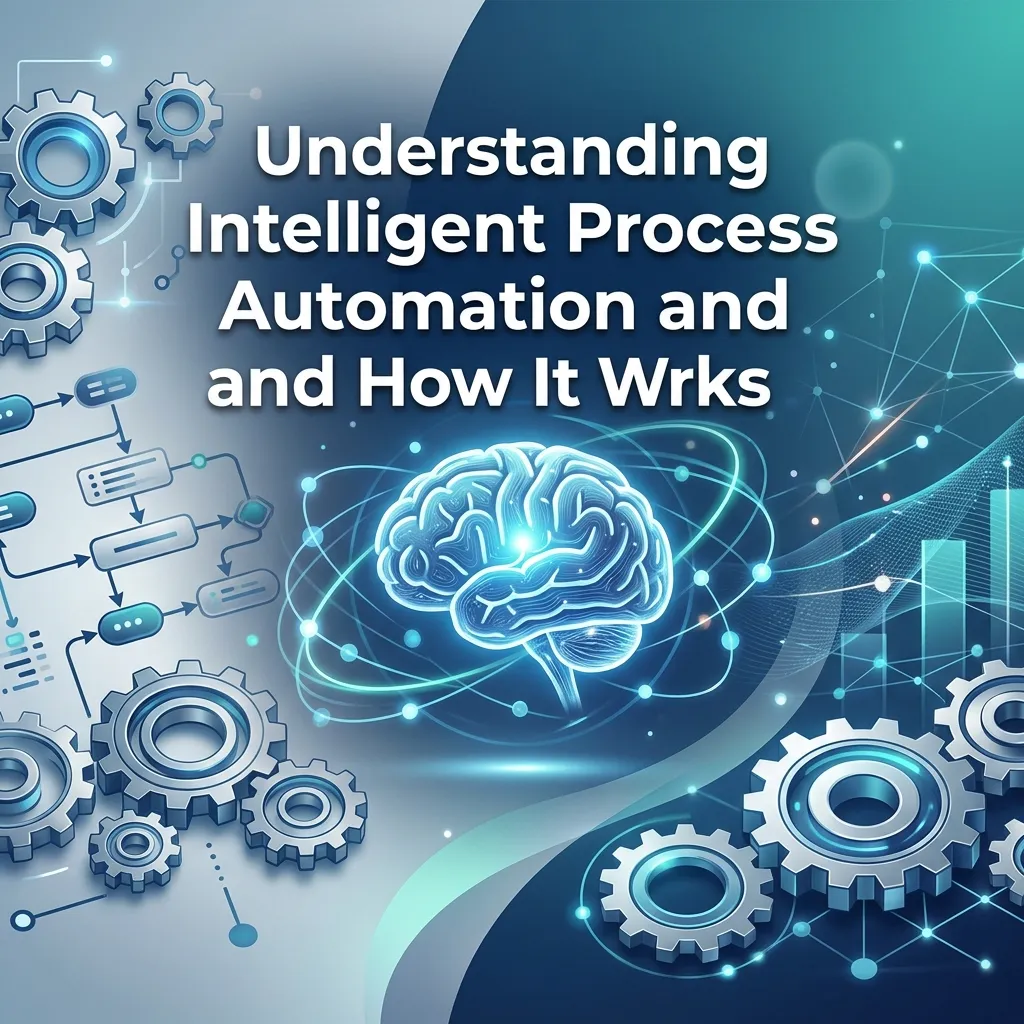
Artificial intelligence and machine learning act as the brain, learning from historical data to improve future performance. Together, they create a dynamic system that continuously optimizes your business processes, freeing up human workers to focus on creative, strategic initiatives.
The Limitations of Standard Tools
Traditional tools break down when rules change. If a vendor sends an invoice with a slightly different column layout, a standard bot will fail and flag the task for human review. This creates bottlenecks. You want a system that adapts to these minor changes naturally.
How Intelligent Process Automation Bridges the Gap
Intelligent process automation solves this by applying cognitive reasoning to workflows. If that same vendor invoice arrives, the process automation system uses computer vision to find the total amount, regardless of where it sits on the page.
To explore more about fundamental workflow concepts, you can read this guide on business automation.
Core Components Driving Intelligent Process Automation
Intelligent process automation is not a single tool, but a powerful convergence of several advanced technologies working perfectly in harmony. By blending these technologies, process automation transforms rigid workflows into adaptable, smart processes.
Robotic Process Automation (RPA)
Robotic process automation is the foundational execution layer of process automation. It involves software bots that interact with digital systems exactly like a human would. They log into applications, copy and paste data, move files, and click buttons. RPA handles the repetitive, rules-based execution phase of the workflow.
Artificial Intelligence (AI) and Machine Learning (ML)
Artificial intelligence provides the cognitive capabilities that make the automation truly intelligent. Machine learning algorithms allow the system to analyze vast amounts of data, recognize complex patterns, and make accurate predictions. Over time, machine learning enables the intelligent process automation software to learn from its mistakes and handle increasingly complex scenarios without requiring new manual programming.
Natural Language Processing (NLP)
Much of the data businesses receive comes in the form of unstructured text, such as emails, customer reviews, and support tickets. Natural language processing allows intelligent process automation systems to read, understand, and interpret human language accurately.
- Sentiment analysis: The system can determine the overall sentiment of an email.
- Data extraction: It easily extracts key information like names, addresses, and invoice numbers.
- Intelligent routing: It can route the message directly to the appropriate department.
Computer Vision
Documents often arrive as scanned images or PDFs. Computer vision, specifically Optical Character Recognition (OCR), enables intelligent process automation tools to “see” and extract text from these visual formats. Modern computer vision can effectively process handwritten notes, recognize varying document structures, and pull relevant data from highly complex tables.
The Transformative Benefits of Intelligent Process Automation
Adopting process automation offers substantial advantages across all levels of an organization. By combining rapid speed with cognitive processing, companies can unlock completely new levels of performance and efficiency.
Enhanced Efficiency and Productivity
Routine tasks often consume a massive portion of the standard workday. Intelligent process automation takes over these time-consuming processes, completing them at speeds no human could ever match. This automation operates around the clock without breaks, drastically reducing turnaround times. Employees are then liberated from tedious data entry, allowing them to redirect their energy toward higher-value work that requires critical thinking.
Substantial Cost Reduction
While implementing intelligent process automation requires a noticeable upfront investment, the long-term financial benefits are profound. Automated systems drastically reduce the need for extensive manual labor in back-office operations. Furthermore, by speeding up processing times and minimizing errors, companies save money that would otherwise be spent on rework and heavy compliance penalties.
Improved Accuracy and Compliance
Human error remains an inevitable part of manual data processing. Fatigue and distraction lead to typos, misplaced files, and miscalculations. Intelligent process automation systems execute tasks with near-perfect accuracy every single time. They also maintain highly detailed logs of every action performed. This comprehensive audit trail makes regulatory compliance much easier, providing transparent records for auditors.
Intelligent Process Automation Use Cases Across Industries
Organizations across completely different sectors are leveraging intelligent process automation to solve unique, complex industry challenges.
Finance and Accounting
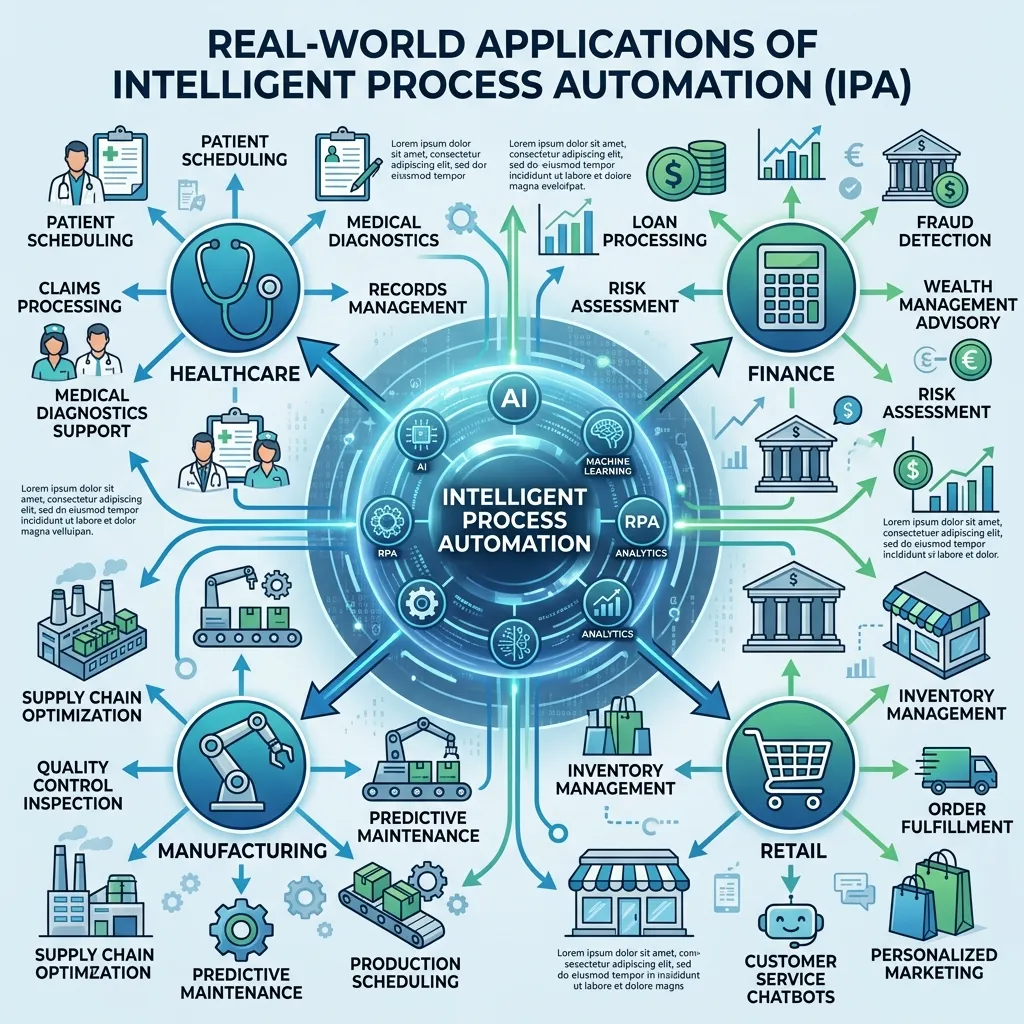
Financial departments handle massive volumes of transactional data daily. Intelligent process automation streamlines accounts payable by automatically reading incoming invoices, matching them against purchase orders, and scheduling payments. It also assists in fraud detection by continuously monitoring transactions and flagging anomalies based on historical spending patterns.
Human Resources Management
The employee lifecycle involves significant paperwork and complex coordination. Intelligent process automation simplifies onboarding by automatically generating offer letters, provisioning IT accounts, and enrolling new hires in benefit programs. It can also manage payroll updates and answer common employee questions via intelligent HR chatbots.
Customer Service Excellence
Customers expect immediate, accurate responses. Intelligent process automation powers intelligent chatbots that completely understand customer intent and resolve common queries instantly. If a customer needs to update their address or check a shipping status, the process automation system can retrieve the data and complete the transaction without involving a human agent.
Healthcare Administration
Healthcare providers constantly deal with strict regulations and vast amounts of patient data. Intelligent process automation automates appointment scheduling, processes complex insurance claims, and securely manages medical billing. By handling these administrative burdens, healthcare professionals can dedicate significantly more time to patient care rather than paperwork.
Comparing Standard RPA vs. Intelligent Process Automation
To fully grasp the power of intelligent process automation, it helps to see how it compares directly to standard robotic process automation.
|
Feature |
Standard RPA |
Intelligent Process Automation (IPA) |
|---|---|---|
|
Data Handling |
Structured data only (spreadsheets, databases) |
Structured and unstructured data (emails, PDFs, images) |
|
Adaptability |
Fails if the exact rules or formats change |
Learns and adapts to layout and format changes |
|
Decision Making |
strictly follows programmed “if/then” rules |
Uses machine learning to make cognitive, probability-based decisions |
|
Human Intervention |
High (for exceptions and errors) |
Low (handles exceptions autonomously over time) |
Challenges and Considerations in Intelligent Process Automation Adoption

Despite the clear benefits, integrating intelligent process automation into an existing business environment comes with specific hurdles that leaders must navigate carefully.
Data Quality and Availability
Intelligent systems absolutely require high-quality data to make accurate decisions. If your company’s historical data is fragmented, outdated, or riddled with errors, the machine learning models will produce heavily flawed results. Cleaning and fully organizing your data infrastructure is a necessary prerequisite for successful intelligent process automation deployment.
Integration with Legacy Systems
Many large enterprises rely on older legacy software that lacks modern APIs. Connecting an advanced process automation platform to older, rigid systems can be technically difficult. IT teams must carefully design integration architectures to ensure seamless data flow between the new automation tools and established databases.
Change Management and Employee Training
Introducing advanced intelligent process automation often creates anxiety among employees who fear job displacement. Transparent communication remains critical. Leaders must emphasize that intelligent process automation is designed to augment human work, not replace it. Providing robust training programs helps staff transition into new roles.
Best Practices for Successful Intelligent Process Automation Implementation
A strategic approach ensures that your intelligent process automation initiatives deliver maximum value and scale effectively across the business.
Start Small and Scale Gradually
Avoid the temptation to automate your most complex process on day one. Begin with a high-volume, low-complexity task. A successful pilot project builds momentum, proves the return on investment, and allows your team to learn the intelligent process automation technology in a controlled environment before expanding to wider use cases.
Define Clear Objectives and KPIs
Automation for the sake of automation rarely yields good results. Identify exactly what you want to achieve with your intelligent process automation initiative, whether it is reducing processing time by 50% or cutting error rates down to zero. Establish clear Key Performance Indicators (KPIs) so you can measure the tangible impact.
Foster IT and Business Collaboration
Business users understand the daily workflows and pain points, while IT understands the technical constraints and security requirements. Successful intelligent process automation requires continuous collaboration between these two groups. Create cross-functional teams to map out processes and design automation solutions.
The Future of Intelligent Process Automation
The capabilities of intelligent process automation are expanding rapidly, promising even greater transformations for the modern enterprise.
The Rise of Hyperautomation
Hyperautomation goes well beyond individual task automation, aiming to automate virtually any repetitive process within an organization. It involves the highly orchestrated use of intelligent process automation, machine learning, and other advanced technologies to create a fully connected, highly automated enterprise ecosystem.
AI-Driven Strategic Decision Making
Currently, intelligent process automation mostly handles execution and basic cognitive tasks. In the near future, these systems will take on significantly more complex, strategic decision-making roles. As predictive models become more sophisticated, process automation will reliably recommend business strategies, optimize resource allocation, and anticipate market trends.
Conclusion
Intelligent process automation is fundamentally changing exactly how modern businesses operate. By blending the raw execution power of RPA with the cognitive abilities of AI, companies are quickly creating agile, highly efficient operational models. The progressive organizations that embrace intelligent process automation are streamlining their workflows, cutting massive costs, and empowering their employees to focus strictly on meaningful, strategic work. Identify the bottlenecks, map out your routine tasks, and consider how intelligent process automation can help your organization easily scale new heights.
Frequently Asked Questions
What exactly is intelligent process automation?
Intelligent process automation is a technology that combines robotic process automation with artificial intelligence. It handles complex, repetitive business workflows by using cognitive technologies like machine learning. This allows the system to process unstructured data and make smart decisions automatically.
How does intelligent process automation differ from standard RPA?
Standard RPA can only follow strict rules and process structured data. Intelligent process automation uses artificial intelligence to learn, adapt, and handle unstructured data like emails and scanned documents. It can manage exceptions without breaking the workflow, unlike basic RPA.
Will intelligent process automation replace human workers?
No, intelligent process automation is designed specifically to augment human workers, not replace them. It takes over tedious, repetitive tasks so employees can focus on strategic, creative, and customer-facing work. It essentially acts as a digital assistant that boosts overall human productivity.
What industries benefit the most from intelligent process automation?
Almost any data-heavy industry benefits immensely from intelligent process automation. Finance, healthcare, human resources, and supply chain management see the highest returns on investment. These sectors deal with high volumes of paperwork and compliance regulations that automation handles perfectly.
How long does it take to implement intelligent process automation?
The timeline for implementation varies widely based on the complexity of the workflow being automated. A simple pilot project can often be deployed in a few weeks. However, scaling intelligent process automation across an entire global enterprise can take several months or longer.
Do I need perfect data to use intelligent process automation?
While your data does not need to be flawless, highly accurate data is crucial for training machine learning models. If you feed the system poor data, it will learn bad habits and make incorrect decisions. Cleaning your data before deployment is always highly recommended.
Can intelligent process automation read scanned PDF documents?
Yes, intelligent process automation uses advanced computer vision and optical character recognition to read scanned files. It can easily extract specific text, recognize tables, and understand handwritten notes. This makes it perfect for processing vendor invoices and paper medical records.
How secure is an intelligent process automation system?
These systems are highly secure when implemented correctly by experienced IT teams. They utilize strict access controls, encryption, and comprehensive audit logs. You can constantly monitor exactly what the software bots are doing to ensure complete data privacy and governance.
Is intelligent process automation too expensive for small businesses?
While enterprise-grade platforms carry high price tags, many vendors now offer scalable, cloud-based solutions. Small businesses can start with a single, affordable automated process and scale up gradually as they see a return on investment. The long-term cost savings usually outweigh the initial setup fees.
How do we measure the success of an intelligent process automation project?
You should measure success using specific, predefined key performance indicators. Track metrics like the reduction in manual processing time, the decrease in data entry errors, and the overall cost savings. Employee satisfaction also often increases as tedious tasks are permanently removed from their workload.
