



This guide explains how to harness creative solutions to turn ideas into actionable results. It covers structured frameworks, teamwork, and tools that help organizations innovate, overcome challenges, and build a sustainable culture of growth.
Organizations and individuals constantly face the need to adapt and grow. Learning how to harness creative solutions transforms abstract ideas into concrete actions. These actions ultimately fuel your competitive advantage. Whether you lead a startup or manage a cross-functional team, structured techniques unlock hidden potential.
The pace of change demands that professionals embrace inventive thinking relentlessly. You must turn daily challenges into massive opportunities. You also need to adapt quickly when market circumstances shift unexpectedly. Creative solutions do not happen by accident.
They emerge from deliberate processes combining fresh perspectives with rapid iteration. Embracing these methods enhances problem resilience and accelerates your time to market. This guide outlines actionable strategies to embed creative solutions into your routine. You will learn how to foster a lasting culture of continuous innovation.
The Importance of Creative Solutions in Modern Workflows

Standard business approaches often fall short when novel challenges arise unexpectedly. Adopting creative solutions allows teams to go far beyond incremental tweaks. You can deliver breakthrough results that completely disrupt your industry. Creativity fuels differentiation and helps your brand stand out globally.
Organizations that continuously champion innovation gain a lasting, profitable edge. They anticipate market shifts and pivot much faster than their rivals. This agility is the true hallmark of a resilient business.
Driving Competitive Advantage
Unique value propositions resonate deeply with target audiences. When you apply creative solutions to product development, customers notice the difference immediately. They reward forward-thinking companies with intense brand loyalty. This loyalty translates directly into sustainable revenue growth.
You must view every operational hurdle as a chance to apply creative solutions. Competitors who rely on outdated methods will quickly fall behind. Innovation ensures your company dictates the market trends rather than chasing them.
Boosting Employee Engagement
Innovative problem solving massively boosts overall employee engagement. Tapping into diverse viewpoints fosters a deep sense of ownership and team motivation. When individuals feel their insights matter, they become highly invested in the outcomes. This investment drives retention rates and cultivates a highly collaborative culture.
Embracing creative solutions also heavily enhances workplace resilience. When standard corporate playbooks fail, teams trained in inventive thinking adapt quickly. They reduce operational downtime and mitigate massive financial risks. Innovation makes your workforce virtually unstoppable.
Core Elements That Drive Effective Innovation
Every enduring creative solution relies on three foundational elements. You must perfectly balance originality, practicality, and measurable impact. Missing even one of these elements will derail your innovation efforts entirely.
Originality, Practicality, and Impact
Originality involves generating novel concepts or making unexpected connections between disparate ideas. Practicality ensures that these concepts align with your resources, strict timelines, and strategic objectives. Impact measures the real-world benefits achieved through your creative solutions.
These benefits include improved user experiences, massive cost reductions, and enhanced operational efficiency. Read more about effective problem-solving.
Striking the Right Equilibrium
Fostering these elements requires a carefully balanced approach from leadership. Too much emphasis on novelty without assessing feasibility leads to highly impractical ideas. These ideas inevitably stall in the early prototype phase. Conversely, focusing solely on safe improvements misses huge opportunities for transformative change.
Effective creative solutions strike the absolute right equilibrium between visionary thinking and disciplined execution. You must dream big but execute with ruthless precision. Innovation requires both a wild imagination and a strict spreadsheet.
Setting Clear Evaluation Criteria
Instituting clear evaluation criteria and performance indicators remains absolutely crucial. You must define key performance indicators to track your creative solutions accurately.
|
Metric Category |
Key Performance Indicator (KPI) |
Purpose in Innovation |
|---|---|---|
|
Speed |
Time to Market |
Measures how fast creative solutions launch. |
|
Financial |
Return on Innovation Investment |
Tracks the profitability of your new ideas. |
|
User Success |
Customer Satisfaction Score |
Gauges how well the innovation solves user pain points. |
|
Adoption |
Internal Usage Rate |
Checks if employees actually use the new process. |
Monitoring these metrics consistently allows you to iterate rapidly. You can allocate resources exactly where inventive efforts yield the greatest returns.
A Five-Step Framework for Generating Creative Solutions
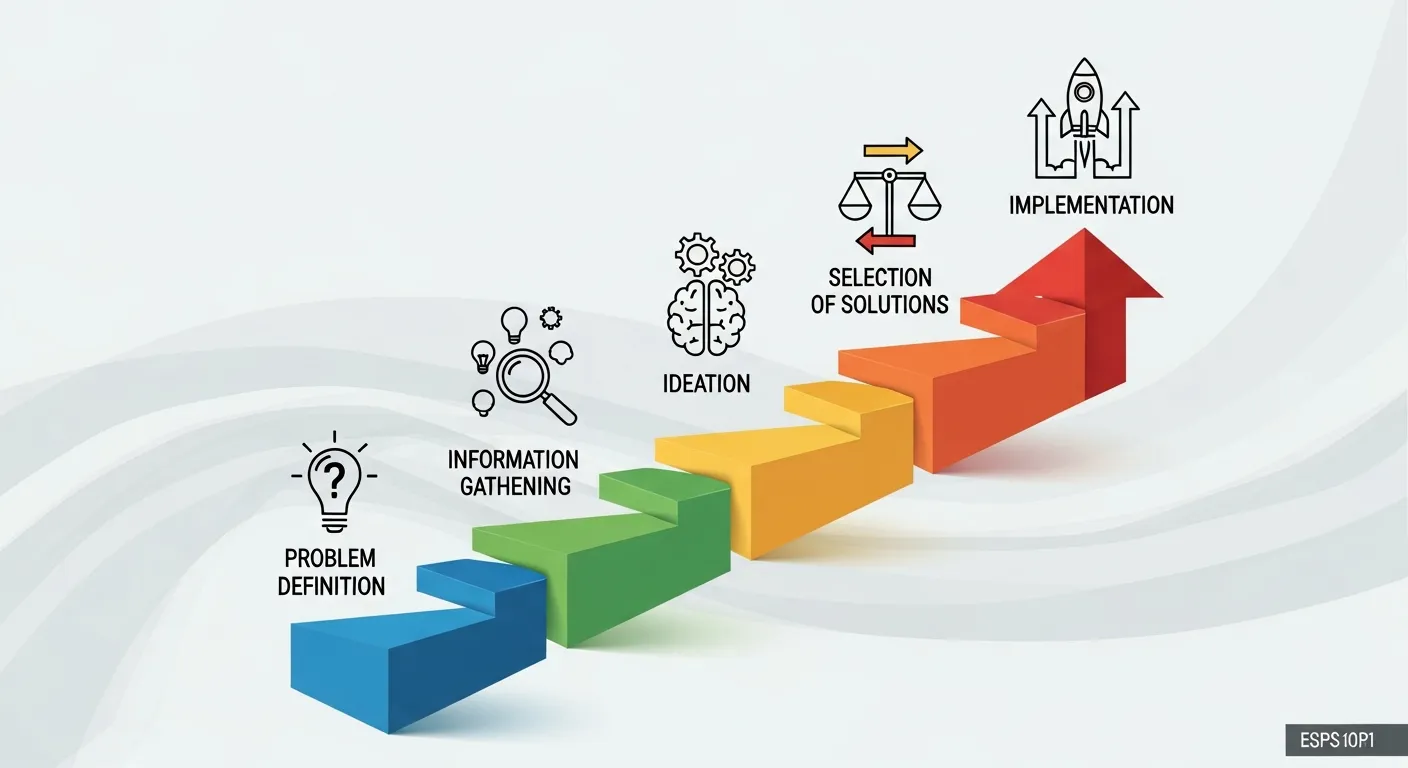
Implementing a structured framework removes the guesswork from corporate innovation. This five-step process guides your team from initial confusion to brilliant clarity. Following these steps guarantees a higher volume of viable creative solutions.
Step 1: Define the Problem Clearly
Begin with a highly concise problem statement that captures the exact current state. You must outline the desired outcome and any strict financial or temporal constraints. Techniques like root cause analysis help peel back surface symptoms completely.
This reveals the deep, underlying issues that require immediate creative solutions. By clearly articulating the challenge, you set a rock-solid foundation for development. You avoid misdirected efforts that waste valuable time and corporate resources.
Step 2: Gather Diverse Perspectives
Innovation thrives heavily in environments where different backgrounds and unique skills intersect. Assemble a cross-functional team representing marketing, engineering, design, and customer support. Conduct highly interactive workshops or targeted surveys to surface varied viewpoints quickly.
This diversity of thought actively prevents dangerous groupthink. It sparks the unexpected connections that form the very basis of creative solutions. Discover essential problem-solving strategies.
Step 3: Ideate Without Judgment
Encourage participants to brainstorm freely and suspend any critical evaluation initially. Methods such as mind mapping and random word association invigorate creative thinking massively. Document absolutely every idea during this phase, no matter how unconventional it seems.
You will revisit and filter these raw concepts once the brainstorming session fully concludes. Free-flowing ideation is the absolute lifeblood of genuine innovation.
Step 4: Prototype and Test Quickly
Rapid prototyping remains essential to validate concepts before substantial financial investment occurs. Create low-fidelity models like paper sketches or simple digital wireframes immediately. Gather honest user feedback as early in the process as humanly possible.
This rapid approach heavily accelerates team learning and highlights unforeseen structural issues. It drastically reduces the risk of highly costly redesigns later in the development process. Testing validates your creative solutions against harsh reality.
Step 5: Refine and Scale
Analyze your test data strictly against the pre-defined key performance indicators. Identify the exact strengths, weaknesses, and clear opportunities for structural improvement. Once the prototype demonstrates highly positive results, develop a strict plan for broader deployment.
Ensure that the necessary infrastructure and change-management processes are fully in place beforehand. Document all lessons learned to streamline your future creative solutions seamlessly. Innovation is a continuous loop of scaling and refining.
Practical Tools and Techniques to Enhance Creativity
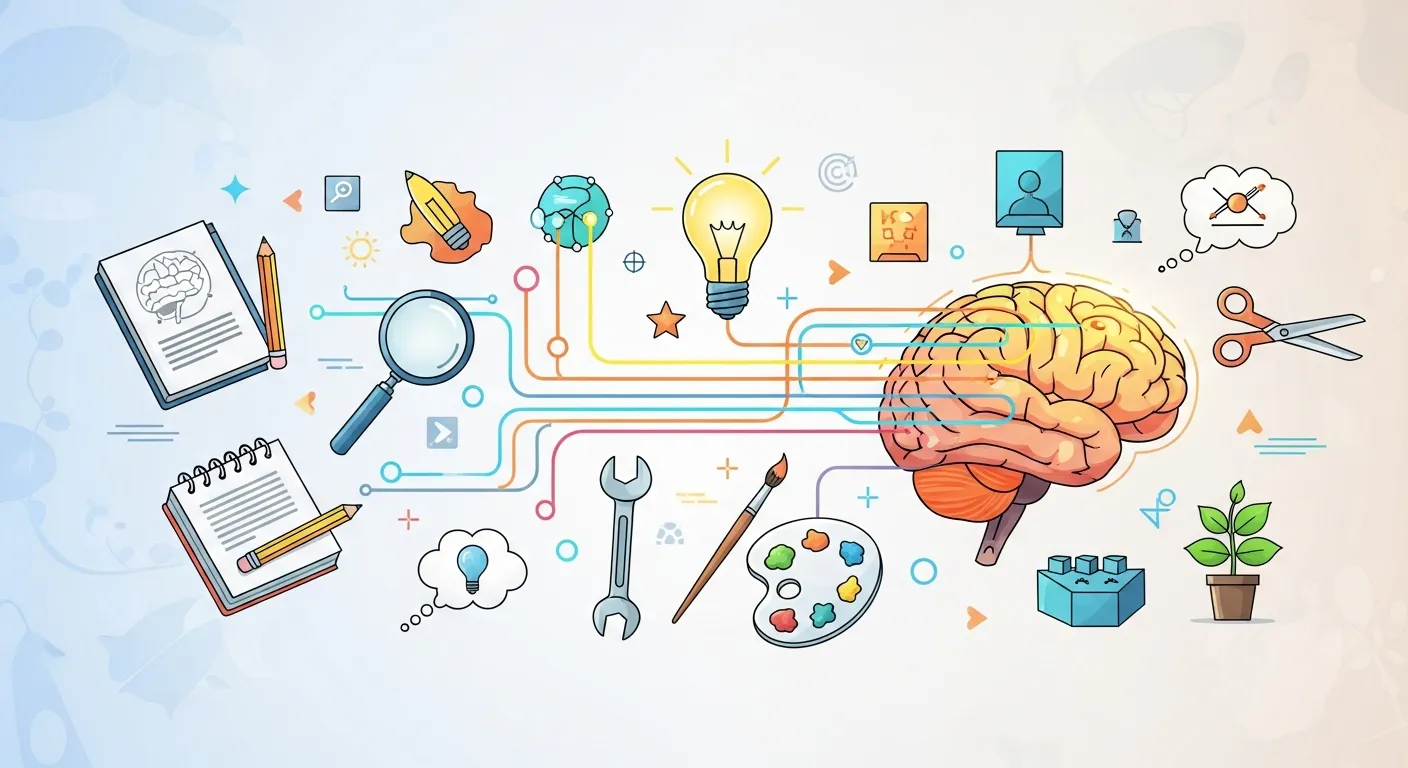
Leveraging the exact right tools dramatically accelerates your journey from raw idea to final implementation. Technology acts as a massive force multiplier for human innovation. You must equip your team with platforms that support creative solutions.
Digital Whiteboards and Collaboration
Digital whiteboards enable globally distributed teams to collaborate visually without friction. They capture spontaneous concepts and organize messy brainstorming sessions perfectly. Idea management platforms help centralize suggestions and track project progress accurately.
They allow managers to prioritize initiatives based strictly on impact and technical feasibility. These tools ensure that brilliant creative solutions never get lost in crowded email inboxes.
Integrating Prompts into Workflows
Integrate strict creativity prompts directly into your daily routine workflows constantly. Random stimulus cards or storytelling exercises maintain high momentum during long projects. For hands-on experimentation, physical prototyping kits facilitate incredibly quick, tactile iterations.
By embedding these fun tools into your process, you create a vibrant ecosystem. Creative solutions will begin to flourish naturally and consistently across your entire organization. Innovation becomes a daily habit rather than a rare event.
Success Stories and Overcoming Common Obstacles
Real-world examples powerfully underscore how creative solutions yield highly measurable business benefits. Examining successful case studies provides a clear blueprint for your own innovation journey. You can learn just as much from studying common obstacles as from studying victories.
Real-World Triumphs
A mid-sized technology firm completely revamped its failing customer support by mapping user journeys. They identified severe friction points and applied creative solutions to fix them. They implemented an AI-driven chatbot for routine inquiries and launched a comprehensive knowledge base.
Within six months, their overall ticket volume dropped by a staggering 30 percent. Customer satisfaction increased massively, and operating costs declined sharply. This proves the undeniable financial power of targeted innovation.
Breaking Down Innovation Barriers
Even the absolute best ideas get stifled by incredibly common corporate barriers. Fear of failure frequently discourages experimentation and halts creative solutions entirely. Severe time constraints limit dedicated innovation efforts for busy employees. Groupthink homogenizes ideas, and limited budgets hamper rapid prototyping.
To counter these tough challenges, you must actively normalize small-scale experiments. Schedule regular innovation sprints and rotate team roles frequently. Engage external experts to introduce completely fresh perspectives and drive creative solutions forward.
Frequently Asked Questions
What exactly are creative solutions?
Creative solutions are highly structured, innovative approaches to solving complex business problems. They combine fresh perspectives, diverse teamwork, and rapid prototyping to achieve breakthrough results. Embracing this concept helps organizations stay agile and highly competitive.
How does innovation differ from standard problem solving?
Standard problem solving relies on past precedents and highly predictable, traditional methods. Innovation demands originality and the courage to test entirely unproven, novel concepts. Both are necessary, but innovation actively drives massive organizational growth.
How can I measure the impact of creative solutions?
You should establish clear KPIs such as time to market and return on innovation investment. Monitor your customer satisfaction scores strictly throughout the entire development process. Analyze this data to evaluate effectiveness and guide your future creative solutions.
Learn more about innovative problem solving strategies.
What are some quick prototyping methods for small teams?
Small teams should use simple paper sketches or highly basic digital wireframes for rapid validation. Creating low-fidelity mockups costs very little money and requires minimal technical setup. This allows you to test creative solutions quickly without exhausting your budget.
How often should a company hold innovation sessions?
The ideal cadence depends heavily on your specific organization’s rhythm and overall workload. Many successful teams find massive value in hosting monthly ideation workshops or quarterly hackathons. Consistency fosters a strong culture of experimentation and constant innovation.
Why is diverse thinking important for creative solutions?
Diverse teams bring entirely different life experiences and professional skills to the brainstorming table. This intersection of unique backgrounds actively prevents groupthink and sparks highly unexpected connections. Diversity remains the absolute core engine of all successful creative solutions.
Read more on harnessing creative solutions.
Can creative solutions improve employee retention?
Yes, encouraging open ideation fosters a deep sense of ownership among your staff. When employees feel their creative solutions are genuinely valued, they become highly motivated. This collaborative culture drives massive job satisfaction and keeps top talent from leaving.
What is the biggest barrier to workplace innovation?
The intense fear of failure is undoubtedly the largest barrier to corporate innovation. When leaders punish mistakes, employees completely stop offering their creative solutions. You must celebrate rapid prototypes and view early setbacks as highly valuable learning opportunities.
How do digital tools support creative solutions?
Digital whiteboards and idea management software centralize suggestions and track progress visually. They allow globally distributed, remote teams to collaborate on creative solutions in real time, seamlessly.
What is the SCAMPER method?
SCAMPER is a powerful brainstorming framework used to generate creative solutions rapidly. It prompts users to Substitute, Combine, Adapt, Modify, Put to another use, Eliminate, or Reverse elements. Walking through these specific prompts uncovers massive opportunities that might otherwise remain hidden.
Conclusion
Harnessing creative solutions is absolutely essential for sustained success and growth. By integrating highly structured processes and leveraging diverse teams, you transform latent ideas into impactful realities. Establish crystal-clear problem definitions and employ proven frameworks to streamline your innovation pipeline.
Measure your outcomes strictly through relevant KPIs and refine your approach continuously over time. Whether you aim to launch exciting new products or elevate customer experiences, these strategies empower you. Start small, learn incredibly quickly, and scale the creative solutions that work best. By embedding innovation at the core of your culture, you create a resilient, unstoppable foundation.
