


Introduction
In today’s digital landscape, organizations that embrace creative solutions can outpace competitors, deepen customer loyalty, and inspire internal teams. Creative solutions are not just about finding quick fixes; they involve a mindset that reframes problems, forges unexpected connections, and nurtures fresh ideas with lasting impact. This year (2026), professionals across sectors recognize that mastering creative problem solving is essential to stay agile amid rapid technological advances and shifting market demands. Whether you’re leading a product development team, reengineering supply chains, or enhancing service experiences, adopting structured innovation practices can transform how challenges are approached and conquered.
This comprehensive article outlines the foundational principles of creative solutions, explores the psychology underpinning innovative thought, reviews proven methods to generate breakthrough ideas, and offers guidance on embedding these practices into everyday workflows. Along the way, we’ll reference authoritative research from institutions such as the American Psychological Association (https://www.apa.org/topics/creativity) and the National Science Foundation (https://www.nsf.gov/) to ground our strategies in evidence-based insights. By the end, you’ll be equipped to cultivate a culture of experimentation, measure the impact of your initiatives, and refine your approach to ensure that creative solutions become an integral part of your organization’s DNA.
The Foundations of Creative Solutions and Psychology Behind Innovation
Creative solutions differ from routine problem solving by their ability to challenge assumptions and generate entirely new approaches. In place of following predefined procedures, teams engaging in creative thinking explore novel combinations, test radical concepts, and iterate toward transformative results. At the heart of such innovation lies a systematic process that encourages exploration, constructive feedback, and rapid prototyping.
To build a robust framework for creative solutions, consider these core components:
- Problem Reframing: Transforming the way you articulate a challenge can open unexpected paths. For example, asking “How might we simplify the user onboarding experience?” often yields more actionable ideas than “Why are customers dropping off?”
- Concept Aggregation: Merging insights from diverse domains—such as applying gaming mechanics to training modules—can spark synergy and produce innovative offerings.
- Experimentation Rituals: Establishing short, time-boxed cycles for building and testing prototypes reduces risk and accelerates learning. Many agile software teams adopt two-week sprints for this reason.
- Inclusive Collaboration: Involving cross-functional stakeholders—designers, engineers, marketers, and customers—ensures that ideas are stress-tested from multiple angles before scaling.
Research from the Harvard Business School (https://www.harvard.edu/) underscores that organizations with formal innovation structures achieve up to 30% higher revenue growth in competitive industries. By embedding these foundational elements, you set the stage for creative solutions to emerge organically and consistently.
Understanding the mental processes that fuel creative solutions empowers leaders to remove barriers and foster an environment conducive to novel thinking. Psychological studies reveal that innovation thrives when individuals balance divergent and convergent thinking. Divergent thinking encourages the generation of numerous, varied ideas, while convergent thinking evaluates and refines them into practical strategies.
Key psychological factors include:
- Intrinsic Motivation: When individuals pursue tasks for the sheer joy of discovery or mastery, they often delve deeper and remain persistent through setbacks. Organizations can enhance intrinsic motivation by aligning projects with personal interests and career aspirations.
- Cognitive Flexibility: The capacity to shift mental gears—adapting old schemas to new contexts—enables teams to break free from linear thought patterns. Encouraging perspective-taking exercises and rotating team roles can strengthen this agility.
- Risk Tolerance: Accepting the possibility of failure lowers the psychological barrier to proposing bold concepts. Establishing “safe-to-fail” pilots helps participants experiment without fearing reprimand for imperfect outcomes.
- Psychological Safety: A research study by the National Science Foundation (https://www.nsf.gov/) confirms that when team members feel secure sharing unorthodox ideas, overall innovation output increases by more than 50%. Leaders can build this climate through open dialogue, active listening, and celebrating experimentation.
By purposefully cultivating these mental conditions, you can unleash the creative potential of each team member and sustain a continuous flow of breakthroughs.
Effective Methods for Generating Breakthrough Ideas
Structured techniques serve as catalysts for creative solutions, guiding teams from initial sparks to concrete concepts. Below are three widely adopted approaches that have stood the test of time in corporate, academic, and nonprofit settings.
Brainstorming Sessions
Brainstorming remains a popular vehicle for idea generation due to its simplicity and flexibility. To maximize effectiveness, follow these best practices:
- Define a Clear Focus: Set a single question or objective—such as “How can we reduce product defect rates by 20%?”—to channel contributions.
- Time-Box Discussions: Allocate 20–30 minutes for unfettered idea sharing to maintain energy and prevent fatigue.
- Defer Judgment: Capture every suggestion without critique, reserving evaluation for a later stage to preserve creativity.
- Leverage Facilitation Tools: Platforms like Miro or MURAL support remote teams by simulating virtual whiteboards loaded with sticky notes and voting capabilities.
- Cluster and Prioritize: After ideation, group similar entries, identify emerging patterns, and vote on themes with the highest potential.
Design Thinking
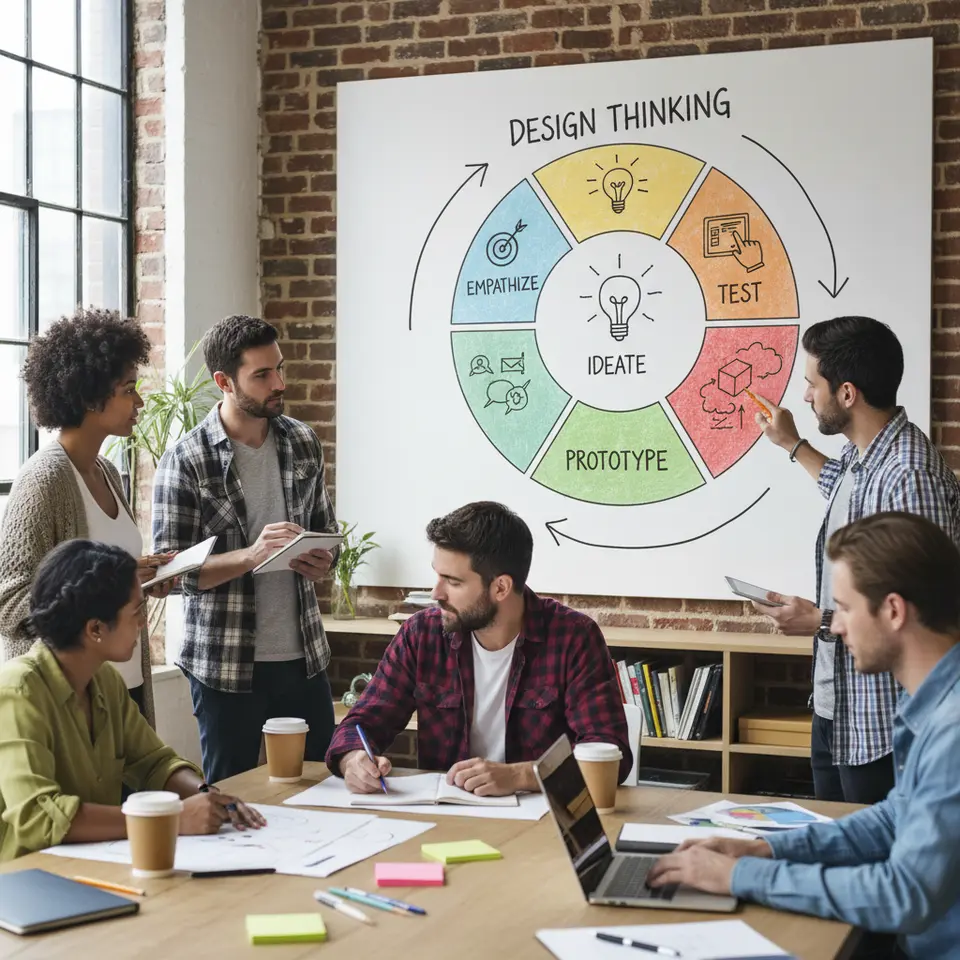
Design thinking is a human-centered methodology that blends empathy, creativity, and rationality. It unfolds in five iterative stages:
- Empathize: Conduct interviews and observations to uncover deep user needs.
- Define: Articulate a concise problem statement grounded in real-world insights.
- Ideate: Generate a broad array of solutions without self-imposed limits.
- Prototype: Build low-fidelity models or sketches to explore concepts quickly.
- Test: Collect user feedback and refine solutions in rapid succession.
This cycle, championed by the Stanford d.school (https://www.stanford.edu/), ensures that creative solutions are not only innovative but also deeply resonant with end users.
SCAMPER Technique
The SCAMPER framework prompts teams to examine challenges through seven distinct lenses:
- Substitute: Exchange components, materials, or processes to boost performance.
- Combine: Fuse two or more features for new functionality.
- Adapt: Borrow ideas from other industries or contexts.
- Modify: Alter attributes such as shape, scale, or appearance.
- Put to Another Use: Repurpose existing solutions for different audiences.
- Eliminate: Remove elements to streamline and simplify.
- Reverse: Rethink the sequence or orientation of steps.
By systematically working through each prompt, teams uncover hidden opportunities and generate creative solutions that might otherwise go unnoticed.
Integrating Creative Solutions into Everyday Workflows and Measuring Impact

Rolling out new practices for creative problem solving requires intentional planning and cultural reinforcement. Here’s a roadmap to embed creative solutions into your organization’s operations:
- Secure Leadership Endorsement: Present evidence-based cases—including ROI projections and industry benchmarks—to executives to obtain buy-in and resources.
- Develop Innovation Champions: Train select individuals in facilitation skills, design thinking, and creative leadership so they can coach peers and sustain momentum.
- Schedule Regular Innovation Sprints: Block recurring time slots—weekly or biweekly—for teams to work exclusively on creative challenges without regular task interruptions.
- Equip with the Right Tools: Provide both physical spaces (whiteboards, prototyping kits) and digital platforms (collaboration software, data visualization tools) to support idea development.
- Set Clear Metrics and Review Cadences: Define key performance indicators (KPIs) related to creative solutions—such as number of pilots launched or customer feedback improvements—and review progress in monthly leadership meetings.
By institutionalizing these steps, creative solutions evolve from one-off experiments into a consistent driver of strategic growth.
To demonstrate the value of creative solutions and secure ongoing investment, organizations must track relevant metrics and continuously refine their approach:
- Input Metrics: Monitor resources devoted to innovation activities, including budget allocation, number of workshops held, and participant engagement levels.
- Output Metrics: Count the volume of ideas generated, prototypes developed, and pilot programs initiated.
- Outcome Metrics: Assess financial and operational benefits such as revenue growth from new offerings, cost savings from process improvements, and enhancements in customer satisfaction scores.
Overcoming common challenges—such as idea overload, team resistance, or resource constraints—requires proactive measures. For example, use prioritization matrices to narrow down concept lists, share early success stories to win over skeptics, and assign clear owners with deadlines to maintain accountability. In today’s fast-paced environment, iterative learning loops help teams adapt and sustain innovation efforts over the long haul.
FAQ
How do I start implementing creative solutions in my organization?
Begin by securing leadership endorsement with clear ROI projections, appoint innovation champions to guide the process, and schedule regular innovation sprints to embed creative practices into workflows.
What tools can support remote brainstorming sessions?
Platforms like Miro and MURAL enable virtual whiteboarding, sticky notes, and voting features, allowing distributed teams to ideate collaboratively and cluster themes effectively.
How can we measure the success of innovation initiatives?
Track input metrics (budget, workshops), output metrics (ideas generated, prototypes built), and outcome metrics (revenue growth, cost savings, customer satisfaction improvements) to evaluate impact and refine strategies.
How do leaders foster psychological safety?
Encourage open dialogue, celebrate experimentation, create “safe-to-fail” environments, and actively listen to all contributions to build trust and lower barriers to sharing bold ideas.
Conclusion
Elevating creative solutions from sporadic brainstorming to strategic imperatives demands a blend of psychology, structure, and cultural support. By understanding the mental drivers behind innovation, applying proven frameworks like brainstorming, design thinking, and SCAMPER, and weaving new practices into daily routines, organizations can unlock a steady stream of transformative ideas. This year (2026), leverage these insights and methods to boost adaptability, spark fresh growth opportunities, and secure a competitive edge. Begin by piloting a small creative sprint, measure your results diligently, and watch your teams evolve into relentless innovators capable of solving tomorrow’s toughest challenges.
